
Search
Remove Ads
Advertisement
Search Results

Definition
Leo VI
Leo VI was emperor of the Byzantine empire from 886-912 CE. He was the second emperor of the Macedonian dynasty and is sometimes known as “Leo the Wise” in reference to his prolific literary output which ranged from orations to law codes...

Definition
Areni Cave
The Areni Cave is a multicomponent cave site with artifacts dating from the Chalcolithic to the Bronze Age. In Armenia, the Areni Cave complex is also known as "Birds' Cave" ("Trchuneri" in Armenian). Located near the town of Areni...

Definition
Romani Language
Romani is an Indo-European language, belonging to the Indic subbranch which includes Sanskrit and Hindi. Because of the Romani diaspora throughout Europe and West Asia, it developed in close contact with European and Iranian languages...

Definition
Xenophon
Xenophon of Athens (l. 430 to c. 354 BCE) was a contemporary of Plato and a fellow student of Socrates. He is best known for his Anabasis (The March Up Country) detailing the retreat of the Ten Thousand Greek mercenaries after the defeat...

Definition
Neo-Assyrian Empire
The Neo-Assyrian Empire (912-612 BCE) was the final stage of the Assyrian Empire, stretching throughout Mesopotamia, the Levant, Egypt, Anatolia, and into parts of Persia and Arabia. Beginning with the reign of Adad Nirari...

Definition
Justinian II
Justinian II “the Slit-nosed” ruled as emperor of the Byzantine Empire in two spells: from 685 to 695 CE and then again from 705 to 711 CE. It was after his first reign and prior to his exile that his nose was cut off by the usurper...
Definition
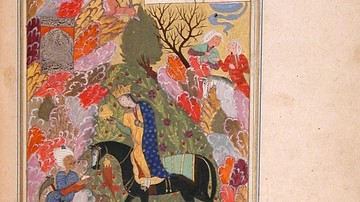
Khamsa of Nizami
Khamsa (also known as Quintet or Panj Ganj) is the best-known work of Nizami Ganjavi (c. 1141-1209 CE) and without a doubt one of the most prominent works of Persian literature. Written during the last decades of the 12th century...
Article
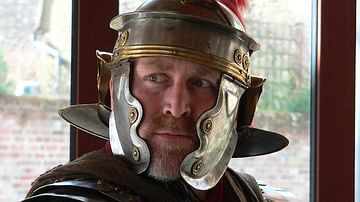
Legions of Noricum, Raetia & Dacia
The provinces Noricum, Raetia, and Dacia served as a buffer protecting Roman Empire against any possible outside threat. However, the region posed several internal problems for Rome: Pannonia and its ally Dalmatia...

Article
What Were the Consequences of WWII?
The consequences of the Second World War (1939-45) were many and varied. Nazi Germany, Fascist Italy, and military-dominated Japan were all defeated. Many occupied countries were liberated and regained their freedom...

Article
British Concentration Camps in the Boer War
The British authorities controversially used concentration camps for civilians during the Boer War (1899-1902) in Southern Africa. The reason was to deprive Boer guerrilla fighters of logistical support and...
