
Search
Did you mean: Apollo?
Remove Ads
Advertisement
Search Results

Image
Map of the Second Anglo-Boer War, 1899–1902 - The Remaking of South Africa
The Second Anglo-Boer War (1899–1902) was a major conflict between the British Empire and the Boer republics of the South African Republic (Transvaal) and the Orange Free State, rooted in imperial rivalry, economic interests, and competing...
Image
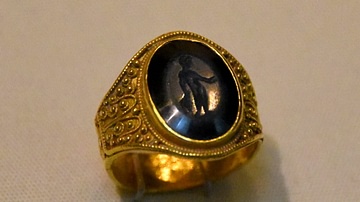
Intaglio Finger-Ring from Anglo-Saxon England
In early Anglo-Saxon England, the highest status men were buried with unique and luxurious items, like this gold finger-ring set with an engraved Roman gem (intaglio). The gem itself dates back to around the 1st century CE while the ring...
Image
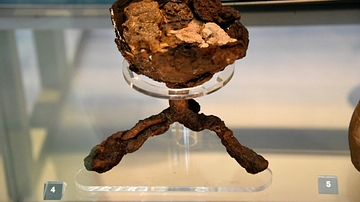
Lamp from Early Anglo-Saxon England
This iron lamp, comprising a round bowl on a tripod foot, still contains the remains of beeswax fuel, but no trace of a wick has survived. Iron lamps are extremely rare finds from early Anglo-Saxon England. So far they have been only found...

Definition
Battle of Hastings
The Battle of Hastings in south-east England on 14 October 1066 saw the defeat of the Anglo-Saxon king Harold II (r. Jan-Oct 1066) by the invading Norman army led by William, Duke of Normandy (reigned from 1035). After a day of heavy fighting...

Video
Early Anglo-Saxon Swords
Sue Brunning examines some shabby looking Anglo Saxon swords.
#CuratorsCorner #AngloSaxon #swords

Definition
Norman Conquest of England
The Norman Conquest of England (1066-71) was led by William the Conqueror who defeated King Harold II at the Battle of Hastings in 1066. The Anglo-Saxon elite lost power as William redistributed land to his fellow Normans. Crowned William...
Definition
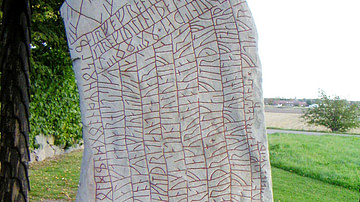
Runes
Runes are letters in the runic alphabets of Germanic-speaking peoples, written and read most prominently from at least c. 160 CE onwards in Scandinavia in the Elder Futhark script (until c. 700 CE) and the Younger Futhark - which illuminated...

Definition
The Saxons
The Saxons were a Germanic people of the region north of the Elbe River stretching from Holstein (in modern-day Germany) to the North Sea. The Saxons who migrated to Britain in the 5th and 6th centuries CE along with the Angles, Frisians...

Article
The Impact of the Norman Conquest of England
The Norman conquest of England, led by William the Conqueror (r. 1066-1087 CE) was achieved over a five-year period from 1066 CE to 1071 CE. Hard-fought battles, castle building, land redistribution, and scorched earth tactics ensured that...

Article
Battle of Aliwal
The Battle of Aliwal on 28 January 1846 saw the British East India Company (EIC) defeat the Sikh Empire. One of four major battles during the First Anglo-Sikh War (1845-6), Aliwal was a decisive victory where the EIC's Bengal Lancers cavalry...
