
Search
Remove Ads
Advertisement
Search Results

Article
Ancient Egyptian Taxes & the Cattle Count
The gods of ancient Egypt freely gave their bounty to the people who worked the land, but this did not exempt those farmers from paying taxes on that bounty to the government. Egypt was a cashless society until...

Article
Visiting the London Mithraeum - Going Underground in Ancient Londinium
London, the proud capital of the United Kingdom, is visited by millions of tourists every year and is famous for its rich history and historical landmarks. Magnificent castles, medieval...
Article
Social Structure in Ancient Egypt
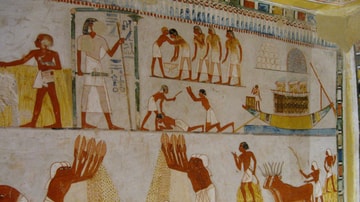
The society of ancient Egypt was strictly divided into a hierarchy with the king at the top and then his vizier, the members of his court, priests and scribes, regional governors (eventually called 'nomarchs'), the...

Article
Sacred Sites & Rituals in the Ancient Celtic Religion
In the religion of the ancient Celts who lived in Iron Age Europe from 700 BCE to 400 CE, certain natural sites like springs, river sources, and groves were held as sacred. These places, as well as...

Article
Ancient History Encyclopedia in Armenia
Last fall, Ancient History Encyclopedia (AHE) received a grant from the National Association for Armenian Studies and Research (NAASR) and the Knights of Vartan Fund for Armenian Studies to complete a grant...

Article
Love, Sex, & Marriage in Ancient Rome
Love, sex, and marriage in ancient Rome were defined by the patriarchy. The head of the household was the father (the pater familias) who had complete control over the lives of his wife, children, and slaves...
Article
Letters to the Dead in Ancient Egypt
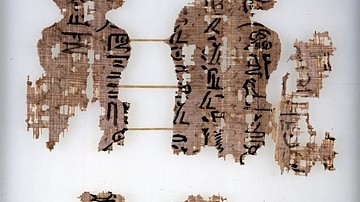
The question of what happens after death has been addressed by religious beliefs and philosophies of every world culture throughout recorded history and ancient Egypt is famous for its own response to the mysteries...

Article
Plague in the Ancient & Medieval World
The word 'plague', in defining a lethal epidemic, was coined by the physician Galen (l. 130-210 CE) who lived through the Antonine Plague (165 - c. 180/190 CE) but the disease was recorded long before in relating...

Article
Visitor's Guide to Ancient Dion
Dion is located at the foot of Mount Olympus in the north of Greece, in what would have been ancient Macedon. It takes its name from the most important Macedonian sanctuary dedicated to Zeus ("Dios” meaning "of Zeus”...
Article
Chariot Racing in Ancient Rome
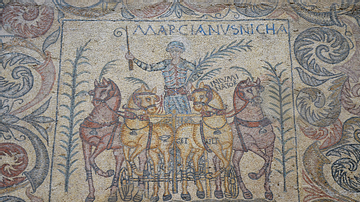
Chariot racing was very big business in ancient Rome. There was a whole industry built around the factions, the four professional stables known by their team colour – Blue, Green, Red, and White –, providing all that...
