
Search
Remove Ads
Advertisement
Search Results

Definition
Ancient Korean Sculpture
The sculpture of ancient Korea was dominated by Buddhist themes such as figurines and monumental statues of the Buddha and his followers, and large bronze bells for temples. Gilded-bronze was the most common material used...

Definition
Ancient Greek Medicine
In ancient Greek medicine illness was initially regarded as a divine punishment and healing as, quite literally, a gift from the gods. However, by the 5th century BCE, there were attempts to identify the material causes for...

Article
Cats in the Ancient World
Cats and humans have shared in each other's lives for thousands of years and, even though they have not always been regarded as highly as in the present, have played an important role in a number of cultures. Always enigmatic...
Article
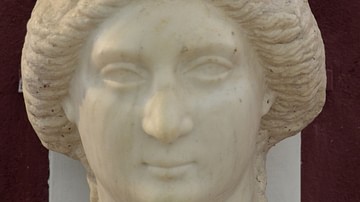
Twelve Great Women of Ancient Persia
Women in ancient Persia had more rights and greater freedom than any other ancient civilization including, according to some scholars, even ancient Egypt which is famous for its respect for the feminine principle...
Article
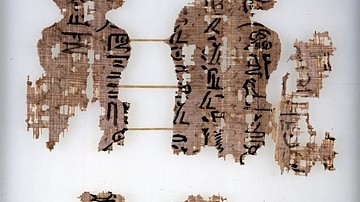
Letters to the Dead in Ancient Egypt
The question of what happens after death has been addressed by religious beliefs and philosophies of every world culture throughout recorded history and ancient Egypt is famous for its own response to the mysteries...

Article
Sacred Cakes in Ancient Greece
Sacred cakes in ancient Greece were baked loaves, biscuits, pastries, and sponges sweetened with honey (meli) and prepared as unburnt offerings to the gods and goddesses and other divine beings. Unburnt offerings were...

Definition
Tiglath Pileser III
Tiglath Pileser III (745-727 BCE) was among the most powerful kings of the Neo-Assyrian Empire and, according to many scholars, the founder of the empire (as opposed to the claims for Adad Nirari II (912-891 BCE) or Ashurnasirpal...

Article
Food & Agriculture in Ancient Japan
The diet of ancient Japan was heavily influenced by its geography as an archipelago, foodstuffs and eating habits imported from mainland Asia, religious beliefs, and an appreciation for the aesthetic appearance...
Definition
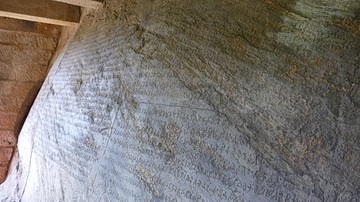
The Edicts of Ashoka the Great
The Edicts of Ashoka are 33 inscriptions engraved on pillars, large stones, and cave walls by Ashoka the Great (r. 268-232 BCE), the third king of the Mauryan Empire (322-185 BCE) of India. One set, the so-called Major...

Video
Society & Religion in the New England Colonies - Khan Academy
The New England colonies organized society around the Puritan religion and family farming. In this video, Kim Kutz Elliott explores New England settlers' reasons for immigrating to North America...
