
Search
Remove Ads
Advertisement
Search Results
Image
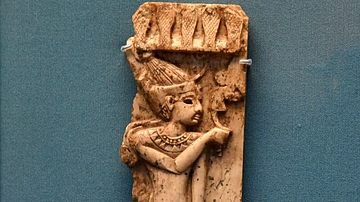
Nimrud Ivory Panel of an Egyptian king
Never seen by the public before 2011. A small fragment of an ivory plaque from Nimrud. The depicted/carved man wears the double crown of Egypt and a royal costume. Phoenician art. Neo-Assyrian Period, 9th to...

Image
Egyptian Funerary Stele from the First Intermediate Period
This is a door-shaped limestone stele of a priestess of the goddess Hathor. First Intermediate Period, 2134-2040 BCE. From Egypt. (Ancient Orient Museum, Istanbul, Turkey).

Article
Ancient Greek Clothing
Ancient Greek clothing developed from the Minoan Civilization of Crete (2000-1450 BCE) through the Mycenean Civilization (1700-1100 BCE), Archaic Period (8th century to c. 480 BCE) and is most recognizable from the Classical...

Definition
Mythology
Myths are a part of every culture in the world and are used to explain natural phenomena, where a people came from and how their civilization developed, and why things happen as they do. At their most basic level, myths comfort by...
Definition
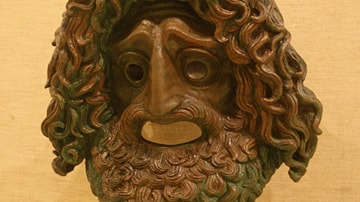
Ancient Greek Tragedy
Greek tragedy was a popular and influential form of drama performed in theatres across ancient Greece from the late 6th century BCE. The most famous playwrights of the genre were Aeschylus, Sophocles, and Euripides and many...

Definition
Ancient Chinese Philosophy
The term Ancient Chinese Philosophy refers to the belief systems developed by various philosophers during the era known as the Hundred Schools of Thought when these thinkers formed their own schools during the Spring and...

Definition
Ma'at
Ma'at (pronounced may-et) is the ancient Egyptian goddess of truth, justice, harmony, and balance (a concept known as ma'at in Egyptian) who first appears during the period known as the Old Kingdom (c. 2613 - 2181 BCE) but no doubt existed...
Image
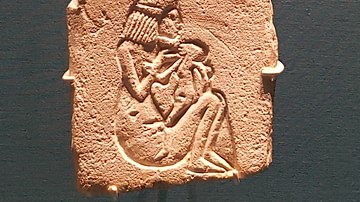
Egyptian Relief Of A Woman & Child
Limestone relief carving of a woman and a child, found in El-Amarna, Egypt, late 18th Dynasty, c. 1350-1330 BCE. The British Museum, London. Photo taken at The Powerhouse Museum, Sydney, Australia. This relief...

Article
Caste System in Ancient India - Varna Ideals in Vedic Times
Ancient India in the Vedic Period (c. 1500-1000 BCE) did not have social stratification based on socio-economic indicators; rather, citizens were classified according to their Varna or castes...

Article
Daily Life in Ancient China
Daily life in ancient China changed through the centuries but reflected the values of the presence of gods and one's ancestors in almost every time period. Villages like Banpo show evidence of a matriarchal society, where...
