
Search
Search Results

Video
Ramesses the Great, his Long Life and Rule of Ancient Egypt
Ramesses the Great (also known as Ramesses II, as well as the shorter form of his name Ramses) was the third Pharaoh of the Nineteenth Dynasty of Egypt, and not only lived for 96 years but reigned for sixty-six of those years between 1279...

Article
The Temple of Hatshepsut
Among the duties of any Egyptian monarch was the construction of monumental building projects to honor the gods and preserve the memory of their reigns for eternity. These building projects were not just some grandiose gesture on the part...

Article
A Brief History of Egyptian Art
Art is an essential aspect of any civilization. Once the basic human needs have been taken care of such as food, shelter, some form of community law, and a religious belief, cultures begin producing artwork, and often all of these developments...

Article
Clergy, Priests & Priestesses in Ancient Egypt
The ancient Egyptians understood that their gods had prevailed over the forces of chaos through the creation of the world and relied upon humanity's help to maintain it. The people of Mesopotamia held this same belief but felt they were co-workers...
Article
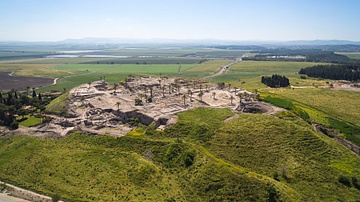
Thutmose III at The Battle of Megiddo
The ancient site of Megiddo was the scene of a number of battles in antiquity and is best known as the source of the word armageddon, the Greek rendering of the Hebrew Har-Megiddo ('Mount of Megiddo') from the biblical Book of Revelation...

Article
Ancient Egyptian Taxes & the Cattle Count
The gods of ancient Egypt freely gave their bounty to the people who worked the land, but this did not exempt those farmers from paying taxes on that bounty to the government. Egypt was a cashless society until the Persian Period (c. 525...
Article
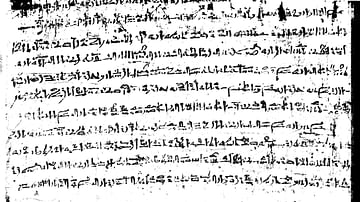
The Report of Wenamun: Text & Commentary
The literature of the Middle Kingdom of Egypt (2040-1782 BCE) is justly famous as some of the best the culture ever produced. Great works like The Tale of the Shipwrecked Sailor and The Tale of Sinuhe stand among the great literary masterpieces...

Article
Ships of the Gods of Ancient Egypt
The Nile River was the source of life for the ancient Egyptians and so figured prominently in their religious beliefs. At night, the Milky Way was considered a heavenly Nile, associated with Hathor, and provider of all good things. The Nile...
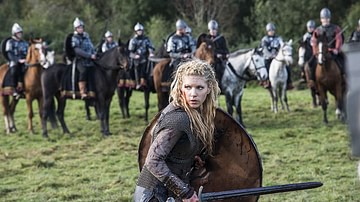
Image Gallery
A Gallery of Ancient, Medieval, & Modern Warrior Women
The first female warrior attested to historically is Queen Ahhotep I of Egypt (l. c. 1570-1530 BCE) who put down a rebellion by the Hyksos when her son, Ahmose I, was campaigning against the Nubians. In literature, the first mention of women...

Image
Abu Simbel Panorama
Abu Simbel is a temple complex, originally cut into a solid rock cliff in southern Egypt at the second cataract of the Nile River. The two temples that comprise the site (The Great Temple and The Small Temple) were created during the reign...
