
Search
Remove Ads
Advertisement
Search Results
Article
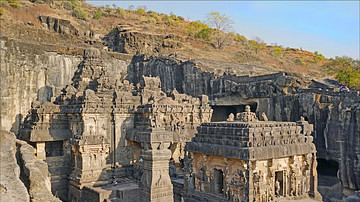
Ellora Caves
Ellora (also known as Elura and, in ancient times, as Elapura) is a sacred site in Maharastra, central India. The Ellora Caves are listed by UNESCO as a World Heritage Site and is celebrated for its Hindu, Buddhist, and Jain temples...

Article
The Ajanta Caves
The 30 caves at Ajanta lie to the north of Aurangabad in the Indhyadri range of Western Ghats. The caves, famous for their temple architecture and many delicately drawn murals, are located in a 76 m high, horseshoe-shaped escarpment...

Book Review
The Greeks in Asia
Written by Britain's most esteemed historian of ancient Greek art and culture, Dr. John Boardman's The Greeks in Asia surveys the historical and cultural influence of the ancient Greeks in the Near East, the Indian Subcontinent...

Image
Bhutanese Prayer Flags
Prayer flags used by the people of Bhutan to bring prosperity and good fortune.

Image
A rock cut image of the Buddha
A rock cut image of Buddha at Bojjanakonda cave Monastery near Anakapalle in Visakhapatnam district of Andhra Pradesh in India.

Image
Buddha's First Sermon
Broken relief showing the First Sermon of the Buddha, 2nd–3rd century CE. The Buddha is depicted turning the Wheel of Law, with attendants and deer also visible.
Peshawar Museum, Pakistan.

Image
Stupa in Ajanta
Ajanta (2nd century BCE – 6th century CE) sculpture showing highly evolved skills of the early Indian artists. A stupa belonging to Cave 26 is shown with sculpted figure of Buddha.

Image
Gautama Buddha in Padmasana
Gautama Buddha in Padmasana. Bas relief on copper plate.

Image
Japanese Tablet with Sutra Inscriptions
This clay tablet with sutra inscriptions was excavated at Komachizuka Sutra Mound in Tanga, which is located in Mie prefecture, Japan. It dates to 1174 CE (Jo'an 4). Important cultural property. (Tokyo National...

Image
Sutra Case from Heian Period Japan
This sutra case was excavated at Hatogamine in Kyoto, Japan. It is made of gilt bronze and dates to the 1116 CE, which was during the Heian period in Japanese history. (Tokyo National Museum)
