
Search
Remove Ads
Advertisement
Search Results

Definition
Byzantine Empire
The Byzantine Empire existed from 330 to 1453. It is often called the Eastern Roman Empire or simply Byzantium. The Byzantine capital was founded at Constantinople by Constantine I (r. 306-337). The Byzantine Empire varied in...

Article
Mesopotamian Effects on Israel During the Iron Age
The Iron Age in the traditional Ancient Near Eastern chronology ranges from somewhere around 1200 BCE to 333 BCE. It begins from the era when it was first thought iron came to be used up to the ascendency...

Article
The Royal Macedonian Tombs at Vergina
Excavations at Vergina in northern Greece in the late 1970s CE unearthed a cluster of tombs thought to be the burial site of Philip II (r. 359-336 BCE), the father of Alexander the Great (r. 336-323 BCE), with...
Article
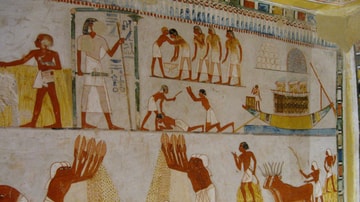
Social Structure in Ancient Egypt
The society of ancient Egypt was strictly divided into a hierarchy with the king at the top and then his vizier, the members of his court, priests and scribes, regional governors (eventually called 'nomarchs'), the...
Article
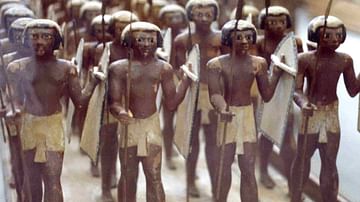
Weapons in Ancient Egypt
The ancient Egyptian military is often imagined in modern films and other media as a heavily armed and disciplined fighting force equipped with powerful weapons. This depiction, however, is only true of the Egyptian army...

Article
Declaration of the Rights of Man and of the Citizen
The Declaration of the Rights of Man and of the Citizen (French: Declaration des Droits de l’Homme et du Citoyen) is a human rights document adopted in the early stages of the French Revolution (1789-1799...

Article
Byzantine Icons
Icons, that is images of holy persons, were an important part of the Byzantine Christian Church from the 3rd century CE onwards. Venerated in churches, public places, and private homes, they were often believed to have protective...

Article
Medieval Knights: 12 of the Best
The knights of medieval Europe were meant to be the finest fighting men of their age, even more important, they were expected to be pure in thought and deed, as exemplified in the chivalrous code which they (usually...
Definition
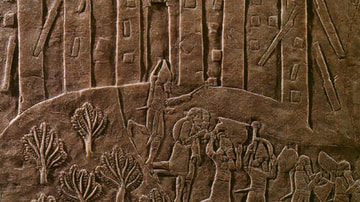
War in Ancient Times
The word 'war' comes to English from the old High German language word Werran (to confuse or to cause confusion) through the Old English Werre (meaning the same), and is a state of open and usually declared armed conflict...

Definition
Philip II of Macedon
Although he is often only remembered for being the father of Alexander the Great, Philip II of Macedon (reigned 359 BCE - 336 BCE) was an accomplished king and military commander in his own right, setting the stage for his...
