
Search
Remove Ads
Advertisement
Search Results
Image
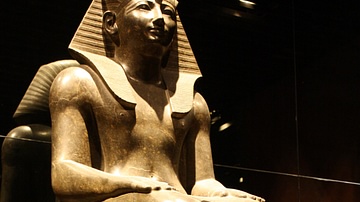
Thutmosis III
A diorite statue of Thutmosis III. From the Temple of Amun, Thebes. Dynasty XVIII, 1479-1425 BCE. (Egyptian Museum, Turin)
Image
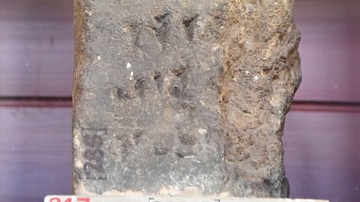
Brick Inscribed with the Name of Shalmaneser III
This cuneiform inscription on this fragment of a large brick mentions the name of the Neo-Assyrian king Shalmaneser III, reigned 858-824 BCE, and the construction of a temple at the city of Nimrud (ancient...
Image
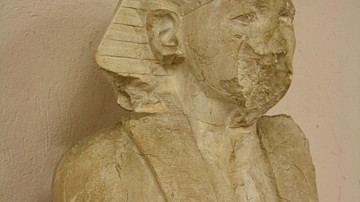
Amenemhat III
Limestone statue (seated) of Amenemhat III, XII Dynasty, Medinet Madi, Temple of Isis-Thermutis. (Egyptian Museum, Castello Sforzesco, Milan)

Image
Shalmaneser III
Detail from a statue of Shalmaneser III (859 BC – 824 BC) at Istanbul Archaeology Museums.
Image
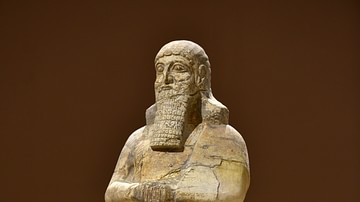
Kurba'il Statue of Shalmaneser III
Kurba'il statue of Shalmaneser III (r. 858-824 BCE), found in Fort Shalmaneser in 1961 by the British School of Archaeology in Iraq. The statue originally stood in the Temple of Adad at the city of Kurba'il...

Image
Throne Dais of Shalmaneser III [North-West Re-entrant, N. Face]
This scene is part of a long tributary one where Shalmaneser III (r. 858-824 BCE) receives tribute from Qalparunda (c. mid 9th Century BCE) of the Land of Unqi (a Luwian Syri-Hittite state...

Image
Throne Dais of Shalmaneser III [South Face, West End]
This scene is part of a long tributary one where the king receives Chaldean tribute from Musallim-Marduk, son of Ukani. Here, the Assyrian king, Shalmaneser III (r. 858 - 824 BCE), stands and his...
Image
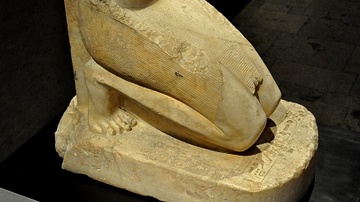
Statue of Thutmose III
Only the lower half of this calcite kneeling figure of the Egyptian pharaoh Thutmose III has survived. From Karnak, modern-day Egypt. New Kingdom, 18th Dynasty, circa 1450 BCE. (State Museum of Egyptian Art, Munich, Germany...
Image
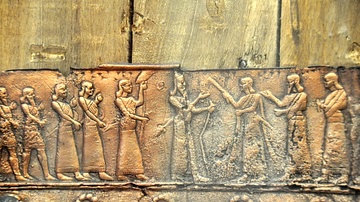
Shalmaneser III, Balawat Gate
Detail of the bronze casing of the Balawat gate. From Balawat (Imgur-Enlil), northern Mesopotamia, Iraq. Neo-Assyrian Period, reign of King Shalmaneser III, 858-824 BCE. (Ancient Orient Museum/Istanbul Archaeological...

Image
Bimetallic Medallion of Emperor Gordian III
Medallions with designs similar to coins could be worn as a symbol of allegiance, or given as prestigious gifts. They were specifically intended to be attractive, as display or presentation pieces. Bimetallic...
