
Search
Remove Ads
Advertisement
Search Results

Article
The Japanese Invasion of Korea, 1592-8 CE
The two Japanese invasions of Korea between 1592 and 1598 CE, otherwise known as the 'Imjin Wars', saw Toyotomi Hideyoshi (1537-1598 CE), the Japanese military leader, put into reality his long-held plan to...

Video
Samurai, Daimyo, Matthew Perry, & Nationalism: Crash Course
In which John Green teaches you about Nationalism. Nationalism was everywhere in the 19th century, as people all over the world carved new nation-states out of old empires. Nationalist leaders...

Video
Nijo Castle, Kyoto - Letters from Japan
Nijo was built as the main residence of the Tokugawa Shoguns. In 1867, the shogunate fell, and Nijo was eventually donated to Kyoto City. It has since become a designated UNESCO World Heritage Site and a popular...
Image
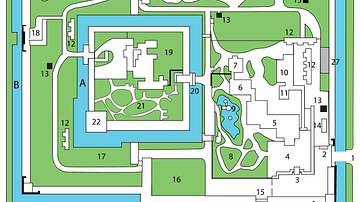
Nijo Castle Plan
A plan of Nijo Castle, Kyoto, Japan. The castle was first built in 1603 CE by the shogun Tokugawa Ieyasu (r. 1603-1605 CE) Key: 1) Higashi-Ōte-mon (Great Eastern Gate, today main entrance) 2) Guard house 3) Kara-mon 4) Honourable...
Image
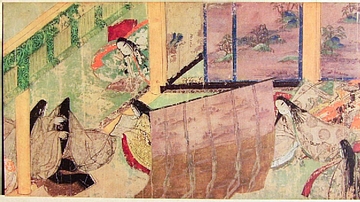
Tale of Genji Illustration
A 12th century CE illustration from an edition of the Japanese classic, the 'Tale of the Genji' or Genji Monogatari, written in the 11th century CE by Murasaki Shikibu. (Tokugawa Museum in Nagoya, Japan)

Image
Nijo Castle Keep
The keep of Nijo Castle, Kyoto, Japan. The castle was first built in 1603 CE by the shogun Tokugawa Ieyasu (r. 1603-1605 CE).
Image
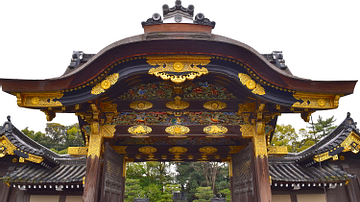
Karamon Gate, Nijo Castle
The Karamon Gate of Nijo Castle, Kyoto, Japan. The castle was first built in 1603 CE by the shogun Tokugawa Ieyasu (r. 1603-1605 CE)

Video
Life in Edo Japan (1603-1868)
Let's take a tour of Edo, Japan's capital (now Tokyo) during the Tokugawa Period.

Book Review
Christ's Samurai: The True Story of the Shimabara Rebellion
The plight of 16-year-old Jerome Amakusa, the supposed leader of the rebellion, and the rebels who accompanied him are at once instantly recognisable to contemporary readers, and yet they were...
