
Search
Remove Ads
Advertisement
Search Results
Definition
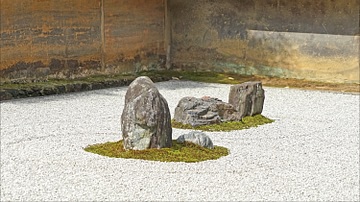
Ryoanji
Ryoanji (Ryōan-ji) is a Zen Buddhist temple in Kyoto, Japan which is today most famous for its Zen rock garden with its enigmatic arrangement of stones. Founded in the 15th century CE, the temple is one of the most visited tourist spots in...

Definition
Seven Lucky Gods
In Japanese folklore the Shichifukujin are the Seven Lucky Gods who may also be known as the Seven Gods of Happiness or the Seven Gods of Good Fortune. The seven gods are in fact of diverse origin as some are originally from Buddhism, some...
Definition
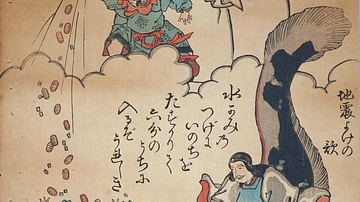
Namazu
Namazu (aka Onamazu) is the giant catfish of Japanese mythology held responsible for creating earthquakes. The creature was thought to live under the earth, and when it swam through the underwater seas and rivers there, it caused earthquakes...

Definition
Mount Koya
Mount Koya (aka Koyasan), located in the Wakayama Prefecture, south of Osaka, Japan, is the site of a temple complex founded in 819 CE by the scholar monk Kukai as the headquarters for Shingon Buddhism. There are temples and sacred buildings...
Image
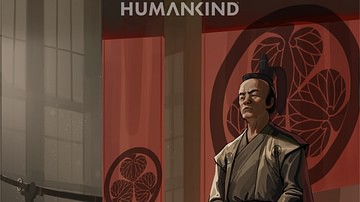
Samurai Bow Before The Shogun
Artist's impression of samurai before their shogun, inside a ceremonial building. Created by Amplitude Studios for the video game Humankind.

Article
The Japanese Invasion of Korea, 1592-8 CE
The two Japanese invasions of Korea between 1592 and 1598 CE, otherwise known as the 'Imjin Wars', saw Toyotomi Hideyoshi (1537-1598 CE), the Japanese military leader, put into reality his long-held plan to invade China through Korea. The...

Video
Nijo Castle, Kyoto - Letters from Japan
Nijo was built as the main residence of the Tokugawa Shoguns. In 1867, the shogunate fell, and Nijo was eventually donated to Kyoto City. It has since become a designated UNESCO World Heritage Site and a popular destination for Kyoto travelers...

Video
Samurai, Daimyo, Matthew Perry, & Nationalism: Crash Course
In which John Green teaches you about Nationalism. Nationalism was everywhere in the 19th century, as people all over the world carved new nation-states out of old empires. Nationalist leaders changed the way people thought of themselves...
Image
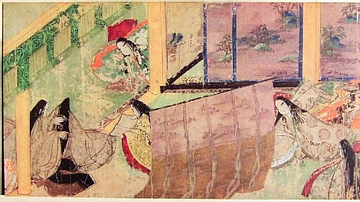
Tale of Genji Illustration
A 12th century CE illustration from an edition of the Japanese classic, the 'Tale of the Genji' or Genji Monogatari, written in the 11th century CE by Murasaki Shikibu. (Tokugawa Museum in Nagoya, Japan)
Image
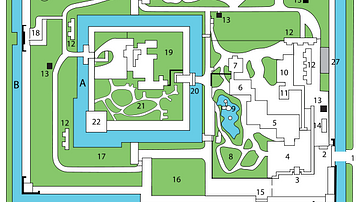
Nijo Castle Plan
A plan of Nijo Castle, Kyoto, Japan. The castle was first built in 1603 CE by the shogun Tokugawa Ieyasu (r. 1603-1605 CE) Key: 1) Higashi-Ōte-mon (Great Eastern Gate, today main entrance) 2) Guard house 3) Kara-mon 4) Honourable Carriage...
