
Search
Remove Ads
Advertisement
Search Results

Article
The Attack on Pearl Harbor - Why the US Entered WWII
A Japanese carrier force attacked the US naval base at Pearl Harbor, O'ahu, Hawaii, on 7 December 1941 and so brought the United States into the Second World War (1939-45). The surprise attack, made...

Article
Why Did Britain & France Appease Hitler?
The policy of appeasement towards the demands of Adolf Hitler (1889-1945) regarding Nazi Germany's territorial expansion ultimately failed when the Second World War (1939-45) began. The reasons appeasement...

Article
Hitler's Occupation of Czechoslovakia
Throughout 1938, Adolf Hitler (1889-1945), the leader of Nazi Germany, threatened to occupy the Sudetenland region of Czechoslovakia. The excuse presented was that Sudeten Germans were being repressed but Hitler...

Article
Mayflower Passengers & Crew
The 102 Mayflower passengers were a diverse group made up of religious separatists (later known as pilgrims) and others referred to by the pilgrims as Strangers (people who did not share their faith). The ship also had...

Article
The Thousand-bomber Raid on Cologne in 1942
Cologne (Köln) was the first German city to experience a "1,000-bomber raid" by the Royal Air Force during the Second World War (1939-45). The attack took place on the night of 30 May 1942 and was planned...

Article
A History of Vaccination - Taming the World's Deadliest Diseases
The field of public health was transformed by the introduction of vaccination, from the Latin word “vacca” meaning cow, to guard people against infectious diseases. It was well known that...
Article
Pets in Ancient Egypt
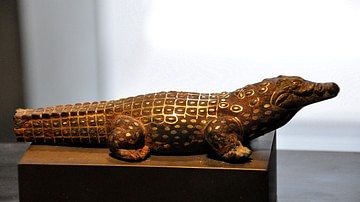
Pets were very important to the ancient Egyptians and considered gifts from the gods to be cared for until their death when they were expected to be returned to the divine realm from which they had come. In life, pets were...

Article
Disarming Aphrodite: Rediscovering the Venus de Milo
The so-called Vénus de Milo is perhaps one of the most iconic works of Western art of any period. The statue of the goddess was found on the Aegean island of Milos, to which she owes her name, on the...
Article
Battle of Yarmouk
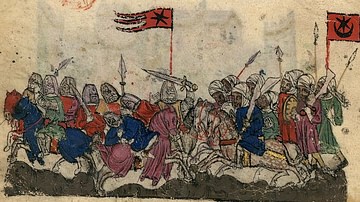
The Battle of Yarmouk River (or Yarmuk River; also written as the Battle of Jabiya-Yarmuk) was fought over the course of six days, from 15 to 20 August 636 CE, between the Muslim army of the Rashidun Caliphate (632-661 CE), under...

Article
Byzantine Icons
Icons, that is images of holy persons, were an important part of the Byzantine Christian Church from the 3rd century CE onwards. Venerated in churches, public places, and private homes, they were often believed to have protective...
