
Search
Remove Ads
Advertisement
Search Results

Definition
Jeremiah
Jeremiah (c. 650-570 BCE) was a major prophet of Israel in the Hebrew Bible. In addition to his book of prophecy, he is also credited with writing the Books of Kings and Lamentations (perhaps written by his scribe, Baruch). Called to...

Definition
Louis XVII of France
Louis XVII of France was the regnal name of Louis-Charles de France (l. 1785-1795), the younger son of King Louis XVI of France (r. 1774-1792) and Queen Marie Antoinette (l. 1755-1793). Although Louis-Charles never actually...

Definition
Ancient Egyptian Religion
Egyptian religion was a combination of beliefs and practices which, in the modern day, would include Egyptian mythology, science, medicine, psychiatry, magic, spiritualism, herbology, as well as the modern understanding...
Definition
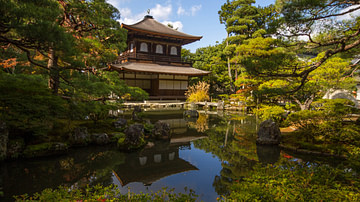
Ginkakuji
The Ginkakuji Temple in Kyoto, Japan, formally referred to as Jisho-ji and otherwise known as 'The Serene Temple of the Silver Pavilion', was first built in the 15th century CE. It is a Rinzai Zen temple with the complex consisting...
Definition
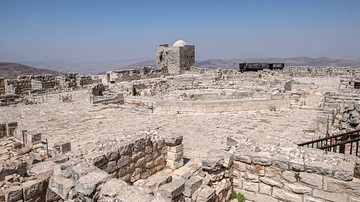
Samaritans
The Samaritans are a religious sect of ethnic Jews living near Mount Gerizim, Nablus, Hebron, and the West Bank in Israel. This community differs from mainstream Judaism by claiming that followers only accept the five books of Moses...

Definition
Cusco
Cuzco (also Cusco or Qosqo) was the religious and administrative capital of the Inca Empire which flourished in ancient Peru between c. 1400 and 1534 CE. The Incas controlled territory from Quito to Santiago, making theirs the largest...

Definition
Enlil - Mesopotamian Keeper of the Tablets of Destiny
Enlil (also known as Ellil and Nunamnir) was the Sumerian god of the air in the Mesopotamian pantheon, but he was more powerful than any other elemental deity and eventually was worshiped as King of...
Definition
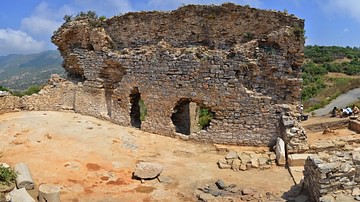
Antiochia ad Cragum
Antiochia ad Cragum (“Antioch on the Cliffs” or “Antioch at Cragus”) was a Hellenistic Roman city located in Cilicia Trachea (“Rough Cilicia”, also known as Cilicia Aspera and Cilicia Secunda) on the southern coast of modern-day...

Definition
Amarna Period of Egypt
The Amarna Period of ancient Egypt was the era of the reign of Akhenaten (1353-1336 BCE), known as 'the heretic king'. In the 5th year of his reign (c. 1348 BCE), he issued sweeping religious reforms which resulted in the...

Article
The Parthenon Sculptures
The extraordinary quality and quantity of the marble sculpture which adorned the 5th century BCE Parthenon in Athens made it the most richly decorated of all Greek temples. The sculpture, now mostly separated into the Parthenon...
