
Search
Remove Ads
Advertisement
Search Results

Article
Battle of Civitate
The Battle of Civitate was fought in southeastern Italy on 18 June 1053 between a papal army of Pope Leo IX (r. 1049-1054) and an outnumbered force of Norman knights seeking recognition of their conquests and titles. The Normans...

Article
Christianization of Iceland
The Christianization of Iceland was a smooth transition compared to other Scandinavian countries. While in Norway, Denmark, or Sweden, royal authority played a crucial role in conversion, in Iceland, it was a parliamentary...

Article
Women in the Mongol Empire
Women in the Mongol Empire (1206-1368 CE) shared the daily chores and hardships of steppe life with men and were largely responsible for tending animals, setting up camps, childrearing, producing food and cooking it. Having...
Article
Wealth & Power in Medieval Iceland
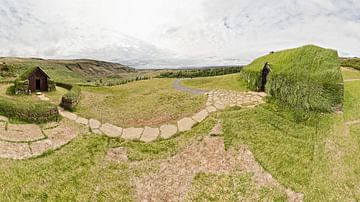
Early medieval Iceland, the Viking colony, was a democratic and egalitarian society, but the scarcity of resources and the rough environment created competition, where local chieftains resorted to different tactics...

Article
Give Me Liberty or Give Me Death
"Give me liberty or give me death!” is the closing line from a speech made by Patrick Henry to the Second Virginia Convention on 23 March 1775, in which he argued that war with Britain was inevitable and a militia...

Article
Trade in the Roman World
Regional, inter-regional and international trade was a common feature of the Roman world. A mix of state control and a free market approach ensured goods produced in one location could be exported far and wide. Cereals...

Article
Declaration of Independence
The Declaration of Independence is the foundational document of the United States of America. Written primarily by Thomas Jefferson, it explains why the Thirteen Colonies decided to separate from Great Britain during...

Image
12 Largest Contiguous Land Empires Before 1880 - From the Mongol Empire to Rome, Qing China & Russia
Land empires were expansive states whose rulers exercised authority over large, substantially connected territories and diverse populations. They grew through...

Article
Women in Ancient China
Women in ancient China did not enjoy the status, either social or political, afforded to men. Women were subordinate to first their fathers, then their husbands, and finally, in the case of being left a widow, their sons...

Article
Why the Industrial Revolution Started in Britain
The Industrial Revolution saw a wave of technological and social changes in many countries of the world in the 18th and 19th centuries, but it began in Britain for a number of specific reasons. Britain...
