
Search
Remove Ads
Advertisement
Search Results

Definition
Sulla
Lucius Cornelius Sulla (138-78 BCE) was a ruthless military commander, who first distinguished himself in the Numidian War under the command of Gaius Marius. His relationship with Marius soured during the conflicts that would follow and...

Definition
Ovid
Publius Ovidius Naso, more commonly known to history as Ovid (43 BCE - 17 CE), was one of the most prolific writers of the early Roman Empire. His works of poetry, mostly written in the form of elegiac couplets, influenced many of the...

Definition
Valerian
Valerian ruled as emperor of the Roman Empire from 253 CE until his capture in 260 CE. In 253 CE an elderly Roman military commander and experienced former senator was proclaimed emperor by his troops - a very common occurrence at the...

Definition
Cilicia
Cilicia is the ancient Roman name for the southeastern region of Asia Minor (modern-day Turkey). It is referenced in the biblical books of Acts and Galatians, was the birthplace of Saint Paul, and the site of his early evangelical missions...

Definition
Perdiccas
Perdiccas (d. 321 BCE) was one of Alexander the Great's commanders, and after his death, custodian of the treasury, regent over Philip III and Alexander IV, and commander of the royal army. When Alexander the Great crossed the Hellespont...

Definition
Titan - The Gods Defeated by the Greek Olympians
In Greek mythology the terrible and powerful Titans were those deities which preceded the Olympian gods. Never worshipped as the other gods, they nevertheless helped, through contrast, to clarify the position...

Definition
Alexander Severus
Alexander Severus served as the Roman emperor from 222 CE until his untimely death in 235 CE. At the urging of his mother, aunt, and grandmother, Emperor Elagabalus named his cousin Alexianus (the future Alexander Severus) as...

Definition
Cusco
Cuzco (also Cusco or Qosqo) was the religious and administrative capital of the Inca Empire which flourished in ancient Peru between c. 1400 and 1534 CE. The Incas controlled territory from Quito to Santiago, making theirs the largest...

Definition
Avars
The Avars were a confederation of heterogeneous (diverse or varied) people consisting of Rouran, Hephthalites, and Turkic-Oghuric races who migrated to the region of the Pontic Grass Steppe (an area corresponding to modern-day Ukraine...
Definition
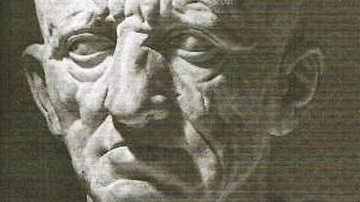
Cato the Elder
Marcus Porcius Cato, better known as Cato the Censor or Cato the Elder (234-149 BCE), was an influential political figure of the Roman Republic. Serving as quaestor, aedile, praetor, consul, and censor, he championed Roman virtues...
