
Search
Did you mean: Satyr?
Remove Ads
Advertisement
Search Results
Image
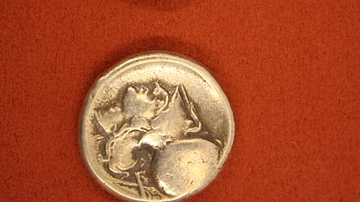
Leucas Silver Stater
Silver stater from Leucas, 330-250 BCE. O: Pegasus. R: Head of Athena.
Image
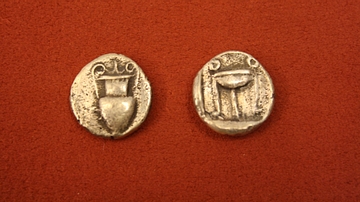
Zacynthos Silver Stater
Silver third of a stater from Zacynthos, 500-456 BCE. O: Amphora. R: Tripod.
Image
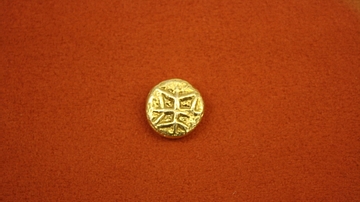
Electrum Third Of A Stater
A third of a stater in electrum from either Ionia or Lydia, ca 600 BCE. O: Geometric motif. (R: Incuse oblong).
Image
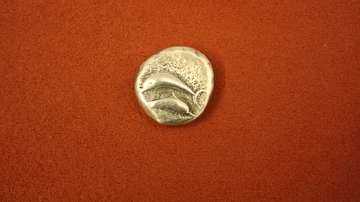
Thera Silver Stater
Silver stater from Thera, Cyclades, c. 500 BCE. O: Two dolphins. (R: incuse square).
Image
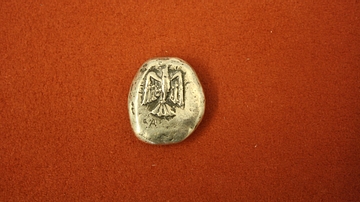
Siphnos Silver Stater
Silver stater from Siphnos, Cyclades, 540-500 BCE. O: Eagle. (R: incuse square).

Image
Lydia Electrum Stater
Electrum coin depicting an uncertain king of Lydia, early 6th century BCE.
Obverse: Head of a roaring lion with multiple rays of the sun on its forehead.
Reverse: Double incuse punch.

Image
Apollo, Macedonian Gold Stater
Macedonian gold stater, 359-336 BCE.
Obverse: Apollo
Reverse: Charioteer
Alpha Bank Numismatics Collection, Kerkyra, Corfu.

Image
Silver Stater, Metapontum
Silver stater from Metapontum, 520 BCE. O: Ear of wheat, R: same incuse. (Alpha Bank Numismatics Museum, Kerkyra, Corfu)
Image
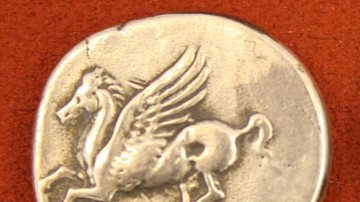
Pegasus, Corinthian Silver Stater
Silver Stater from Corinth, 386-307 BCE.
Obverse: Pegasus,
Reverse: Athena.
Alpha Bank Numismatics Collection, Kerkyra, Corfu.
Image
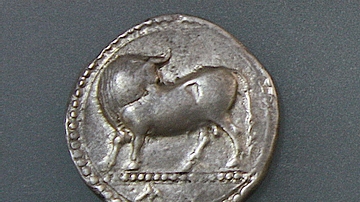
Silver Stater of Sybaris
A silver stater of Sybaris, southern Italy. c. 550-510 BCE. (Archaeological Museum of Altamura, Italy)
