
Search
Remove Ads
Advertisement
Search Results

Definition
Michael III
Michael III, also known as “Michael the Drunkard” by his detractors, was emperor of the Byzantine Empire from 842 to 867 CE. Never quite escaping the shadow of his mother Theodora, who ruled as regent in his name until c. 855 CE...

Definition
Yurt
A yurt (ger in Mongolian) is a large circular tent made of wool felt stretched over a wooden frame used by nomadic peoples of the Asian steppe since before written records began. Yurts are especially associated with Mongol herders and...

Definition
Byzantine Coinage
The coinage of the Byzantine Empire continued that of its more ancient predecessors and functioned as a convenient method of payment for goods and services, especially to soldiers and officials, and as a means for people to pay...

Definition
Napoleon's Invasion of Russia
Napoleon's invasion of Russia, also known as the Second Polish War or, in Russia, as the Patriotic War of 1812, was a campaign undertaken by French Emperor Napoleon I (r. 1804-1814; 1815) and his 615,000-man Grande...

Definition
Qanat
The qanat (called foggara in North Africa and the Levant, falaj in the United Arab Emirates and Oman, kariz in Iran, and puquios in Peru) is an ancient Middle Eastern irrigation technique in which a long tunnel is dug into arid land that...
Definition
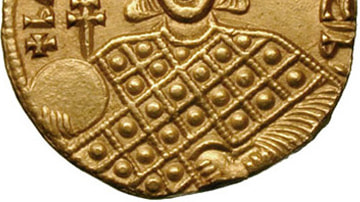
Basil I
Basil I was emperor of the Byzantine Empire from 867 to 886 CE and he founded the "Macedonian" dynasty which lasted for over 200 years. Basil was an Armenian from a humble background who had risen to become the second most powerful man...

Definition
Karakorum - Capital of the Mongol Empire
Karakorum (aka Qaraqorum, modern name: Harhorin) is located in the Orkhon Valley of central Mongolia and was the capital of the Mongol Empire from 1235 to 1263. Ogedei Khan (r. 1229-1241) ordered its construction...

Article
Hadrian's Travels
No other Roman emperor travelled as much as Hadrian (r. 117-138 CE). The 'restless' emperor spent more time travelling than in Rome, devoting half of his 21-year reign to the inspection of the provinces. His travels provided...

Article
Follow the Money. The Coinage of Later Imperial Rome: A Reflection of Economic Stress and Decline
Unlike the practice of professional numismatists, I prefer to see the “big picture”. So, my entire Roman coin collection, all 250 pieces, from Julius Caesar to...

Definition
Hadrian
Hadrian (l. 78-138 CE) was emperor of Rome (r. 117-138 CE) and is recognized as the third of the Five Good Emperors (Nerva, Trajan, Hadrian, Antoninus Pius, and Marcus Aurelius) who ruled justly. His reign marked the height of the Roman...
