
Search
Remove Ads
Advertisement
Search Results
Definition
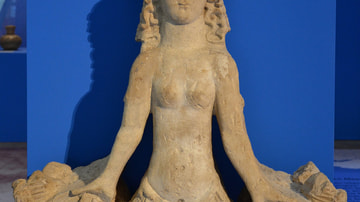
Scythian Religion
Scythian religion appears to be an amalgam of belief in a pantheon of gods grafted to more ancient animal reverence and shamanistic practice. According to their burial finds, the Scythians appear to have had a deep affinity with...
Definition
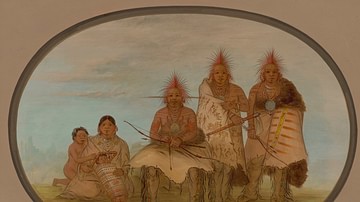
Pawnee
The Pawnee are a Native American nation of the Plains Indians culture originally from the region of modern Nebraska. Prior to the European colonization of the Americas, they were among the most powerful of the Plains Indian tribes numbering...

Article
Christian Celibate Martyrs
Martyrologies, a unique genre of Christian literature, appeared from the 2nd century CE. A martyrology tells the story of the suffering and ordeals of a Christian martyr and details their trial and execution. A shared...

Article
Herodotus: On The Customs of the Persians
Although the Greek historian Herodotus (l. c. 484-425/413 BCE) is often criticized for inaccuracy in his Histories, his frequently-anthologized On the Customs of the Persians is regarded as accurate. The passage...

Article
Threshing Floors of the Bible
The threshing floors of the Bible were outdoor stone floors, usually circular in fashion, used by farmers to process the grain of their crops. For the larger community, like watermills of the recent past, they could...

Article
Aztec Ceremonial Knife
The Aztec mosaic-handled knife currently in the British Museum, London dates to between 1400 and 1521 CE and is thought to have been used in religious ceremonies. Made from wood and flint the knife handle represents an Aztec...

Article
The Aztec Calendar
The Aztecs of ancient Mexico measured time with a sophisticated and interconnected triple calendar system which followed the movements of the celestial bodies and provided a comprehensive list of important religious festivals...
Article
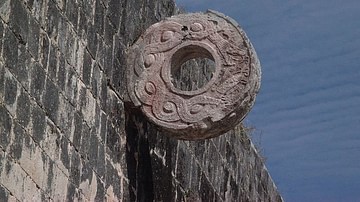
The Ball Game of Mesoamerica
The sport known simply as the Ball Game was played by all the major Mesoamerican civilizations and the impressive stone courts became a feature of many cities. More than just a game, it could have a religious significance...

Definition
Nemea
Nemea was a religious sanctuary in the northern Peloponnese of Greece where pan-Hellenic athletic games were held every two years from 573 BCE until 271 BCE, after which, the Games were definitively moved to Argos. Early Settlement...

Definition
Agamemnon (Play)
The play Agamemnon was written by one of the greatest Greek tragedians Aeschylus (c. 525 – 455 BCE), “Father of Greek Tragedy.” Older than both Sophocles and Euripides, he was the most popular and influential of all tragedians...
