
Search
Remove Ads
Advertisement
Search Results
Definition
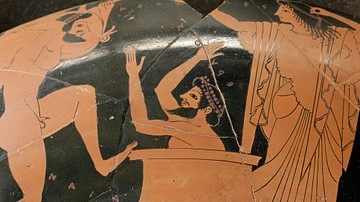
The Children of Heracles
The Children of Heracles (Heraclidae) is one of Euripides' lesser-known and least popular works, as is the myth surrounding the tragedy play. Its date is also uncertain, possibly written in the late 430s or early 420s BCE...
Article
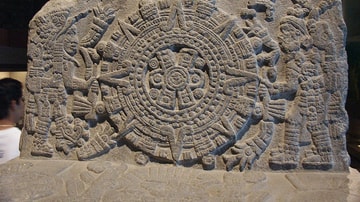
The Aztec New Fire Ceremony
The New Fire Ceremony, also known as the Binding of the Years Ceremony, was a ritual held every 52 years in the month of November on the completion of a full cycle of the Aztec solar year (xiuhmopilli). The purpose of...

Definition
Olmec Civilization
The Olmec civilization, located in ancient Mexico, prospered in Pre-Classical (Formative) Mesoamerica from c. 1200 BCE to c. 400 BCE. Monumental sacred complexes, massive stone sculptures, ball games, the drinking of chocolate...

Definition
Religion in the Ancient World - Order and the Spiritual Experience
Religion (from the Latin Religio, meaning "restraint," or Relegere, according to Cicero, meaning "to repeat, to read again," or, most likely, Religionem, "to show respect for what is sacred"...

Definition
Tenochtitlan
Tenochtitlan (also spelled Tenochtitlán), located on an island near the western shore of Lake Texcoco in central Mexico, was the capital city and religious centre of the Aztec civilization. The traditional founding date of the city...

Definition
Coyolxauhqui
Coyolxauhqui (pron. Koy-ol-shauw-kee) was the Aztec goddess of the Moon or Milky Way who was famously butchered by her brother Huitzilopochtli, the god of war, in Aztec mythology. This story was commemorated in a celebrated large...
Definition
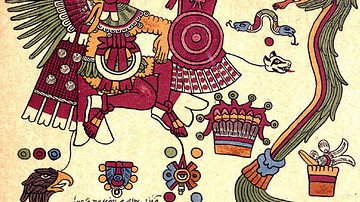
Xipe Totec
Xipe Totec (pron. Xi-pe To-tec) or 'Flayed One' in Nahuatl, was a major god in ancient Mesoamerican culture and particularly important for the Toltecs and Aztecs. He was considered the god of spring, the patron god of seeds and planting...
Definition
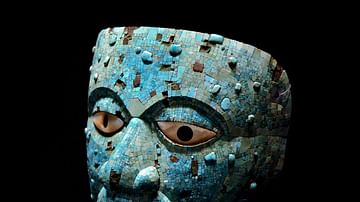
Xiuhtecuhtli - The Aztec God of Fire
Xiuhtecuhtli or 'Turquoise Lord' was the Aztec god of fire and also closely associated with young warriors and rulers. To the Maya he was known as Chac Xiutei. Xiuhtecuhtli was the patron of the day Atl (water...

Article
Threshing Floors of the Bible
The threshing floors of the Bible were outdoor stone floors, usually circular in fashion, used by farmers to process the grain of their crops. For the larger community, like watermills of the recent past, they could...

Article
Herodotus: On The Customs of the Persians
Although the Greek historian Herodotus (l. c. 484-425/413 BCE) is often criticized for inaccuracy in his Histories, his frequently-anthologized On the Customs of the Persians is regarded as accurate. The passage...
