
Search
Search Results

Article
Continuity and Change after the Fall of the Roman Empire
The cataclysmic end of the Roman Empire in the West has tended to mask the underlying features of continuity. The map of Europe in the year 500 would have been unrecognizable to anyone living a hundred years earlier. Gone was the solid boundary...

Article
The Principate of Augustus
Augustus (r. 27 BCE to 14 CE), as the adopted son and heir of Julius Caesar (100-44 BCE), brought an end to the Roman Republic, and on 16 January 27 BCE, by Senatorial decree, he became the first Roman emperor. However, he would not be addressed...
Article
Sulla's Reforms as Dictator
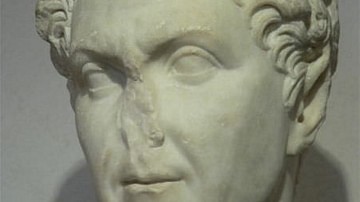
Lucius Cornelius Sulla (l. 138 - 78 BCE) enacted his constitutional reforms (81 BCE) as dictator to strengthen the Roman Senate's power. Sulla was born in a very turbulent era of Rome's history, which has often been described as the beginning...

Article
Ara Pacis Augustae
The Ara Pacis Augustae or Altar of the Augustan Peace in Rome was built to celebrate the return of Augustus in 13 BCE from his campaigns in Spain and Gaul. The marble structure, which once stood on the Campus Martius, is a masterpiece of...

Article
Sulla's March on Rome
In 88 BCE, Lucius Cornelius Sulla (138-78 BCE) marched on Rome and entered the city's sacred inner boundary, the pomerium, bearing arms. Breaking this taboo, he sought to gain political power and control of the army of the East that had been...

Article
Rome under the Julio-Claudian Dynasty
The Julio-Claudians were the first dynasty to rule the Roman Empire. After the death of the dictator-for-life Julius Caesar in 44 BCE, his adopted son Octavian - later to become known as Augustus (r. 27 BCE - 14 CE) - fought a civil war against...

Article
On the Path of Early Christianity in Marseille
Today, Marseille is known more for its modern history – World War II, North African immigration, and, of course, the rousing choruses of France's national anthem, La Marseillaise. Yet it is also one of France's most ancient cities, one rich...

Article
Visitor’s Guide to the Monuments of Hadrian’s Villa
Hadrian’s Villa near Tivoli, Italy, is an opulent, sprawling garden-villa covering some 120 hectares (296 acres). It was built by Emperor Hadrian (76-138 CE) between 125-134 CE for use as his country estate, although the land may have originally...
Article
Sammu-Ramat and Semiramis: The Inspiration and the Myth
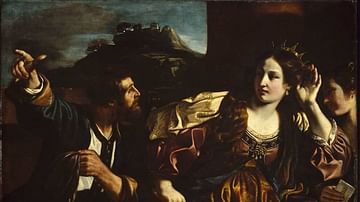
Sammu-Ramat (r. 811-806 BCE) was the queen regent of the Assyrian Empire who held the throne for her young son Adad Nirari III (r. 811-783 BCE) until he reached maturity. She is also known as Shammuramat, Sammuramat, and, most notably, as...

Article
Rome's Egyptian Heritage
The Eternal City of Rome is one of the places in the world with the most historical sites to visit. The list of ancient ruins, museums, churches, and other historical landmarks makes the city an Eldorado for anyone interested in history...
