
Search
Did you mean: Roman Walls?
Remove Ads
Advertisement
Search Results

Definition
Arminius
The Cherusci noble Arminius (c. 18 BCE - 19 CE) led the resistance to Roman conquest of Germania during the years 9-16 CE. Likely raised as a child hostage in Rome, Arminius gained command of a German auxiliary cohort in the Roman army...

Definition
Battle of Adrianople
The Battle of Adrianople on August 9, 378 CE ranks among the worst military defeats in all of Roman history. Its estimated losses of over 10,000 are comparable to Roman defeats at Cannae (216 BCE) and Carrhae (53 BCE). The...
Definition
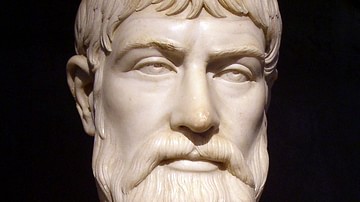
Pindar
Pindar (c. 518 to c. 448/7 BCE) was an ancient Greek lyric poet, probably the greatest of his time. His works have been divided into 17 books of different types of poetry, but only those containing 44 choral victory songs composed for...

Definition
Alexander I the Philhellene
Alexander I of Macedon, also known as Alexander I the Philhellene ('friend of the Greeks') or 'The Wealthy', was king of ancient Macedon from around 498 to 454 BCE. He is known for the role he played in the second Persian...

Definition
Roman Verona
Verona, situated on the river Adige in northern Italy, was a Roman town probably founded some time in the 2nd century BCE. It was a colonia by 69 CE and the impressive monuments which survive to this day attest to the city's importance...

Article
The Roman Baths in Bath- A Deep Dive into Britain’s Ancient History
Bath, the famous spa town in Somerset England, has attracted people from near and far for centuries to its healing springs and baths. Today the city is known for its beautiful Georgian...

Definition
Titus (Roman Emperor)
Titus was Roman emperor from 79 to 81 CE. On June 24, 79 CE Titus Flavius Vespasianus succeeded his father Vespasian (r. 69-79 CE) as emperor of the Roman Empire. Prior to his ascension to the throne, he was considered by...

Article
Roman Artillery
Roman artillery weapons were instrumental in the successes of the Roman army over centuries and were especially used in siege warfare, both for offence and defence. Principally used in fixed positions or onboard ships, these machines...

Definition
Roman Coinage
Roman coins were first produced in the late 4th century BCE in Italy and continued to be minted for another eight centuries across the empire. Denominations and values more or less constantly changed but certain types such as the...
Definition
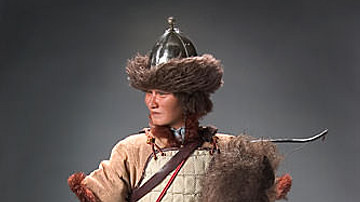
Attila the Hun
Attila the Hun (r. 434-453 CE) was the leader of the ancient nomadic people known as the Huns and ruler of the Hunnic Empire, which he established. His name means "Little Father" and, according to some historians, may not have...
