
Search
Remove Ads
Advertisement
Search Results

Article
The Sea Dogs - Queen Elizabeth's Privateers
The sea dogs, as they were disparagingly called by the Spanish authorities, were privateers who, with the consent and sometimes financial support of Elizabeth I of England (r. 1558-1603 CE), attacked and...
Article
Middle Eastern Power Shifts & the Trade of Pepper from East to West
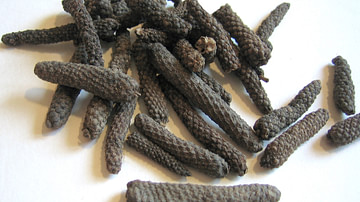
Pepper has long been the king of spices and for almost 2,000 years dominated world trade. Originating in India, it was known in Greece by the 4th century BCE and was an integral part of...

Article
Battle of Wagram
The Battle of Wagram (5-6 July 1809) was one of the largest and bloodiest battles of the Napoleonic Wars (1803-1815). It resulted in a pyrrhic victory for French Emperor Napoleon I (r. 1804-1814; 1815) whose army crossed the Danube...

Article
The Extent of the Roman Empire
Time has seen the rise and fall of a number of great empires - the Babylonian, the Assyrian, the Egyptian, and lastly, the Persian. Regardless of the size or skill of their army or the capabilities of their leaders...

Article
The Dolmens of Sicily
It is a well-known fact that Sicily, the largest island in the Mediterranean sea, went through a quite complex prehistoric period. So much so that it is difficult to navigate through the muddle of people that have followed...

Article
Education in Roman Spain
There was no compulsory state education for children in any of the western provinces of the Roman Empire. The primary sources are sparse when it comes to the education in Roman Spain, and while some scholars argue for a...

Image
Statue of King Afonso Henriques I
Statue of a king, probably King Afonso Henriques I (r. 1147-1185 CE) the first king of Portugal. The bust is from the Antiga Ermida de S. Miguel da Alcáçova, Santarém, 13th century CE. Now located in The Carmo Archaeological...

Image
Map of Africa after the Treaty of Versailles, c.1920
In the aftermath of World War I (1914–1918), Africa remained overwhelmingly under European colonial domination, despite widespread African participation in the war effort. While the conflict weakened...

Image
Portuguese Ceramic Tile
A polychrome faience azulejo (or glazed ceramic tile) showing a vase of flowers with cherubim. This tile is typical of designs influenced by Portugal's overseas colonies and territories. The tile is from Nossa Senhora da...

Image
Arab Room Tiles, Sintra Palace
Islamic ceramic tiles in the Arab Room in the Sintra palace (Palácio Nacional de Sintra), Portugal. King Manuel I of Portugal (r.1495-1521 CE) imported azulejos (glazed ceramic tiles) from the Alhambra palace in Granada...
