
Search
Remove Ads
Advertisement
Search Results

Definition
Sejong the Great
King Sejong the Great (15 May 1397 to 8 April 1450 CE) ruled Korea from 1418 to 1450 CE as the fourth king of the Joseon Dynasty (also spelled Choson). One of only two Korean kings called 'the Great' today, Sejong had a major...

Definition
Constitutional Convention
The Constitutional Convention was held at Independence Hall in Philadelphia, Pennsylvania, from 25 May to 17 September 1787. Spurred on by economic troubles left over from the American Revolution and compounded by the...

Definition
Russian Civil War - The Failed Fightback Against Bolshevism
The Russian Civil War (1917-22) began shortly after the Bolshevik Revolution of November 1917. The Bolsheviks (the Reds) immediately found themselves in conflict with various opposition forces...
Definition
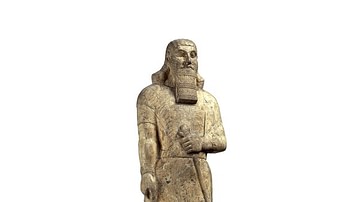
Ashurnasirpal II
Ashurnasirpal II (r. 884-859 BCE) was the third king of the Neo-Assyrian Empire. His father was Tukulti-Ninurta II (r. 891-884 BCE) whose military campaigns throughout the region provided his son with a sizeable empire and the...

Definition
Oppidum - The Hilltop Fort of the Celts
Celtic hilltop forts, often called oppida (sing. oppidum), after the Latin name given to larger settlements by the Romans, were built across Europe during the 2nd and 1st century BCE. Surrounded by a fortification...
Definition
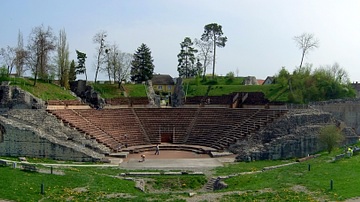
Augusta Raurica
Augusta Raurica is a former Roman colony and city located on the Rhine River some 11 km (7 miles) east of the modern Swiss city of Basel, in between the towns of Kaiseraugst and Augst. Founded by Lucius Munatius Plancus (90 BCE...

Definition
Ancient Nara
Nara, located around 30 km south of modern Kyoto, was the capital of ancient Japan between 710 and 784 CE. It gave its name to the Nara Period (710-794 CE), although the name during the 8th century CE was Heijokyo. Modelled on the...

Definition
Adad Nirari I
Adad Nirari I (r. 1307-1275 BCE) was the king of the Assyrian Empire who initiated the first major expansion of the Assyrian kingdom from the city of Ashur throughout the region of Mesopotamia. He also instituted what would become...

Definition
Moses
Moses (c. 1400 BCE) is considered one of the most important religious leaders in world history. He is claimed by the religions of Judaism, Christianity, Islam, and Bahai as an important prophet of God and the founder of monotheistic belief...

Definition
Ancient China
Ancient China produced what has become the oldest extant culture in the world. The name 'China' comes from the Sanskrit Cina (derived from the name of the Chinese Qin Dynasty, pronounced 'Chin') which was translated as 'Cin' by...
