
Search
Remove Ads
Advertisement
Search Results

Definition
Investiture Controversy
The Investiture Controversy, also referred to as the Investiture Contest or Investiture Dispute, was a conflict lasting from 1076 to 1122 between the papacy of the Catholic Church and the Salian Dynasty of German monarchs...

Article
The Ideology of the Holy Roman Empire
"The Holy Roman Empire was in no way holy, nor Roman, nor an empire," wrote Voltaire, and this interpretation still dominates the popular imagination, so the Holy Roman Empire is treated as a bad joke, a pale...
Image
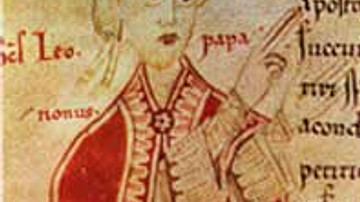
Pope Leo IX
Pope Leo IX (r. 1049-1054), illustration from an illuminated manuscript, 11th century.

Article
The Isaurians and the End of Germanic Influence in Byzantium
Germanic influence reigned in the Roman Empire from the end of the 4th century CE through the 5th. Germanic individuals took important posts in the government and the military, and Germanic...

Article
Battle of Civitate
The Battle of Civitate was fought in southeastern Italy on 18 June 1053 between a papal army of Pope Leo IX (r. 1049-1054) and an outnumbered force of Norman knights seeking recognition of their conquests and titles. The Normans...

Definition
Frederick II
Frederick II (l. 1194-1250 CE) was the king of Sicily (r. 1198-1250 CE), Germany (r. 1215-1250 CE), Jerusalem (r. 1225-1228 CE), and also reigned supreme as the Holy Roman Emperor (r. 1220-1250 CE). He was born in Jesi in 1194 CE...

Definition
Diet of Worms
The Diet of Worms (January-May 1521) was the assembly convened by Charles V, Holy Roman Emperor to address, among other issues, the works of the reformer Martin Luther (l. 1483-1546) who openly criticized the Church. Luther was...

Image
Map of the Travels of Leo Africanus, c. 1509–1518 - Africa, Trade and Empires in the Early 16th Century
The travels of Leo Africanus (al-Hasan ibn Muhammad al-Wazzan al-Fāsī, c. 1494–c. 1554) illuminate the political, commercial, and cultural connections of early...

Definition
Matilda of Tuscany
Matilda of Canossa (c. 1046-1115), the Countess of Tuscany (r. 1055-1115) and Vice-Queen of Italy (r. 1111-1115), was the final head of the noble House of Canossa following the deaths of her father in 1052 and her elder brother...
Definition
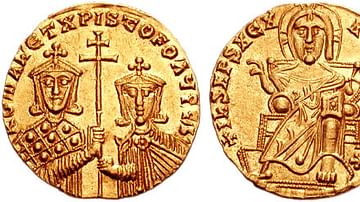
Romanos I
Romanos I Lekapenos (“the Ignorant”) was emperor of the Byzantine Empire from 920 to 944 CE. Of Armenian descent, he was a military commander who usurped the throne to rule as co-emperor with the rightful heir, but still minor, Constantine...
