
Search
Remove Ads
Advertisement
Search Results
Definition
Zoroastrianism
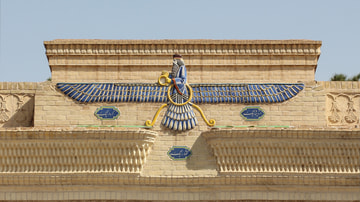
Zoroastrianism is the monotheistic faith established by the Persian prophet Zoroaster (also given as Zarathustra, Zartosht) between c. 1500-1000 BCE. It holds that there is one supreme deity, Ahura Mazda (Lord of Wisdom), creator...

Definition
Odin
Odin (Old Norse: Óðinn) is the main god in Norse mythology. Described as an immensely wise, one-eyed old man, Odin has by far the most varied characteristics of any of the gods and is not only the deity to call upon when war was being...

Definition
Typhon
Typhon (also Typheus) is the largest and most dreadful monster in Greek mythology. He was tall, with a brutish face, and had wings, countless snakeheads in place of hands, and a lower body made up of coiled serpents. His eyes flashed...

Definition
Idunn
Idunn (pronounced Ih-dune) is a fertility goddess in Norse mythology who holds the apples of eternal youth the gods rely on to remain young and healthy. The Norse gods were not immortal – they just lived very long lives – and the apples...

Definition
Loki
Loki is a god in Norse mythology who is often simply described as the 'trickster' god for his love of playing pranks on both his fellow gods and his or their opponents. Sworn brother of Odin and often the one to dig the other gods out...

Definition
Delian League
The Delian League (or Athenian League) was an alliance of Greek city-states led by Athens. The league was formed in 478 BCE to liberate eastern Greek cities from Persian rule. The league was then used as a defence against possible...
Article
Herodotus: On The Customs of the Persians
Although the Greek historian Herodotus (l. c. 484-425/413 BCE) is often criticized for inaccuracy in his Histories, his frequently-anthologized On the Customs of the Persians is regarded as accurate. The passage...

Article
Alexander the Great & the Burning of Persepolis
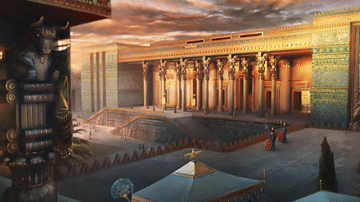
In the year 330 BCE Alexander the Great (l. 356-323 BCE) conquered the Achaemenid Persian Empire following his victory over the Persian Emperor Darius III (r. 336-330 BCE) at the Battle of Gaugamela in...

Definition
Avesta
The Avesta is the scripture of Zoroastrianism which developed from an oral tradition founded by the prophet Zoroaster (Zarathustra, Zartosht) sometime between c. 1500-1000 BCE. The title is generally accepted as meaning “praise”, though...

Definition
Fire Temple
Fire Temples are places of worship in the Zoroastrian religion. They were known as ataskada (“house of fire”) by the Persians but are best known today by their Greek name pyratheia (fire temple). They are thought to have originated...
