
Search
Remove Ads
Advertisement
Search Results

Definition
Juba II
Juba II (c. 48 BCE - 23 CE) was a Numidian prince and the king of Mauretania from c. 25 BCE until his death in 23 CE. He was raised in the household of Julius Caesar (c. 100-44 BCE) and married Cleopatra Selene II (40 - c. 17/5 BCE...

Definition
Odysseus
Odysseus (Roman name: Ulysses) was one of the great pan-Hellenic heroes of Greek mythology. He was famous for his courage, intelligence, and leadership. Odysseus' resourcefulness and oratory skills were instrumental in the Greek victory...

Definition
Sabratha
Sabratha was an ancient port city on the coast of North Africa (in modern-day Libya). The site was originally inhabited by the indigenous Berber Zwagha tribe in the 8th century BCE (according to the 11th-century CE historian al-Bakari...

Definition
Cleopatra Selene II
Cleopatra Selene II (40 - c. 5 BCE) was a member of the Ptolemaic Dynasty who became the queen of Mauretania upon her marriage to King Juba II of Numidia (48 BCE - 23 CE). Though more obscure than her famous mother, Cleopatra...

Definition
Colossi of Memnon
The Colossi of Memnon (also known as el-Colossat or el-Salamat) are two monumental statues representing Amenhotep III (1386-1353 BCE) of the 18th Dynasty of Egypt. They are located west of the modern city of Luxor and face east...

Definition
Tympanon
The tympanon (tympanum in Latin) was the most popular frame-drum in ancient Greek music, producing a loud rumbling sound not far from the sound of the orchestral timpani drums today. This percussion instrument was played mainly by women...
Definition
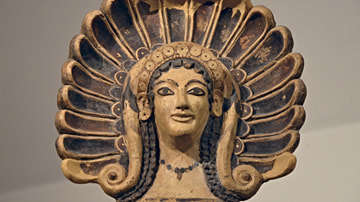
Etruscan Pottery
Etruscan pottery, produced over five centuries, was nothing if not varied. Indigenous wares such as the glossy black bucchero were made alongside red- and black-figure pottery imitating, yet modifying those produced in the Greek...

Definition
Warring States Period
The Warring States period (481/403 BCE - 221 BCE) describes the three centuries when various rival Chinese states battled viciously for territorial advantage and dominance. Ultimately the Qin state was victorious and established...

Definition
Ancient Egyptian Culture
Ancient Egyptian culture flourished between c. 6000 BCE with the rise of technology (as evidenced in the glasswork of faience) and 30 BCE with the death of Cleopatra VII, the last Ptolemaic ruler of Egypt. It is famous...

Definition
Nile
The world's longest river, located in Egypt, the Nile flows 4,132 miles (6,650 kilometres) northward to the Mediterranean Sea (a very unusual direction for a river to take). It was considered the source of life by the ancient Egyptians...
