
Search
Remove Ads
Advertisement
Search Results
Image
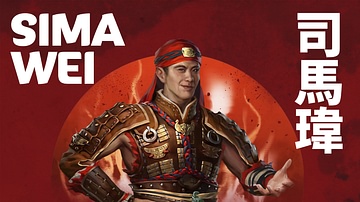
Sima Wei
Artist's impression of Sima Wei (d. 291 CE) as depicted in the video game Total War: The Three Kingdoms, The Eight Princes Chapter Pack.
Definition
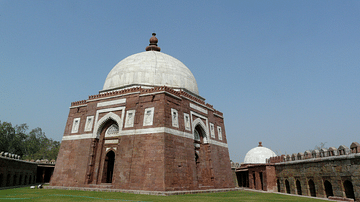
Tughlaq Dynasty
The Tughlaq dynasty (also spelt Tughluq), ruled the Delhi sultanate from 1320 to 1413. Followed by the Khalji dynasty and preceded by the Sayyids, the Tughlaq dynasty formed an important period in the history and culture of the...

Article
The Art of the Tang Dynasty
The art of the Tang Dynasty (618-907 CE) began to explore new possibilities in materials and styles with landscape painting and ceramics, in particular, coming to the fore. New techniques, a wider range of colours and...

Definition
Mamikonian Dynasty
The Mamikonians were a powerful clan group who were influential in Armenian political and military affairs from the 1st century BCE onwards. They rose to particular prominence from c. 428 CE to 652 CE in the half of Armenia...

Definition
Umayyad Dynasty
The Umayyad Dynasty (661-750 CE), the first dynasty to take the title of Caliphate, was established in 661 CE by Muawiya (l. c. 602-680 CE), who had served as the governor of Syria under the Rashidun Caliphate, after the death...

Definition
Sargonid Dynasty
The Sargonid Dynasty was the last ruling house of the Neo-Assyrian Empire from 722-612 BCE, beginning with the reign of Sargon II and ending with fall of the Neo-Assyrian Empire. Some of the most famous kings in the history of...
Definition
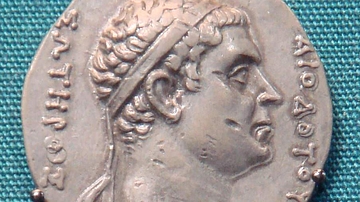
Diotid Dynasty
The Diodotids were a Greco-Bactrian dynasty of kings, composed of the two rulers Diodotos I and his son Diodotos II. The dynasty lasted between c. 250 BCE and c. 230 BCE, which was very short but significant because Diodotos I...

Definition
Luoyang - Ancient Chinese Capital
Luoyang (aka Loyang) was the capital city of many ancient Chinese dynasties, a position it frequently swapped with Chang'an, usually whenever there was a change of dynasty. Located in the Henan province in the eastern...

Definition
Chang'an
Chang'an, located near modern Xian in Shaanxi Province, was the capital of several dynasties of ancient China from the Zhou to the Tang and eventually became one of the world's great metropolises. With regular tree-lined avenues, high...

Article
Achievements of the Han Dynasty
The achievements of the Han dynasty (206 BCE - 220 CE), often regarded by scholars and the ancient Chinese themselves as the golden era of Chinese culture, would have lasting effects on all who followed, particularly...
