
Search
Did you mean: Nisaba?
Remove Ads
Advertisement
Search Results

Definition
Cleopatra of Macedon
Cleopatra of Macedon (355/4-308 BCE), daughter of Philip II of Macedon (reign 359-336 BCE) and his Molossian queen, Olympias of Epirus (c. 375-316 BCE), was the only full sister of Alexander the Great (reign 336-323 BCE). Born in Pella, the...

Definition
Alexios I Komnenos
Alexios I Komnenos (Alexius Comnenus) was emperor of the Byzantine Empire from 1081 to 1118 CE. Regarded as one of the great Byzantine rulers, Alexios defeated the Normans, the Pechenegs, and, with the help of the First Crusaders, the Seljuks...

Definition
New Testament
New Testament is the name for the second half of the Christian Bible, compiled from the 2nd century CE, after the separation of Christianity from Judaism. The Christian Bible retained books of the Jewish scriptures, the Old Testament, as...

Definition
Lysimachus
Lysimachus (c. 361-281 BCE) was one of Alexander the Great's trusted bodyguards and a member of his Companion Cavalry. Although he obtained Macedonian citizenship, his father was a Thessalian named Agathocles. After the death of Alexander...

Definition
Amastris
Amastris (c. 340/39-285 BCE) was a niece of the Persian king Darius III (r. 336-330 BCE) through her father Oxyathres. She was married in succession to Alexander's general Craterus, the tyrant Dionysius of Heraclea, and finally to Lysimachus...
Definition
Cilicia Campestris
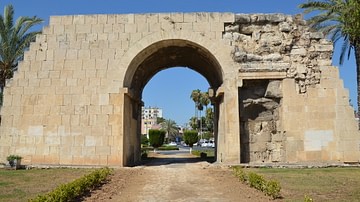
Cilicia Campestris was one of the six districts of the Roman province of Cilicia organized by Pompey the Great (l. c. 106-48 BCE) in 64 BCE. The name translates roughly into “Cilicia of the Plains” and corresponds to the earlier name for...

Article
The Crusades: Causes & Goals
The Crusades were a series of military campaigns organised by Christian powers in order to retake Jerusalem and the Holy Land back from Muslim control. There would be eight officially sanctioned crusades between 1095 CE and 1270 CE and many...

Article
The Women of Athena's Cult
In ancient Athens, women had no life outside the home unless they were prostitutes or were engaged in religious activities such as festivals. Every Greek deity in every city-state had their own cult (sect) but the cult of Athena offered women...

Article
The Differences Between Byzantine & Armenian Christianity
Although both the Byzantines and the Armenians were Christian, the types of Christianity they professed had important differences that led to a lack of recognition and tensions between the two groups and a considerable part of their relationship...

Article
Mavia's Revolt & the Christian Question
In 378 CE the Tanukhid queen Mavia (r. c. 375 - c. 425 CE) of the Saracens led a successful revolt against the Roman Empire, pitting her forces against the armies under the emperor Valens (364-378 CE). Launching her insurrection from the...
