
Search
Remove Ads
Advertisement
Search Results

Definition
Caracalla
Caracalla was Roman emperor from 211 to 217 CE. Born Lucius Septimius Bassianus, son of Septimius Severus and Julia Domna, he became co-ruler with his father in 198 CE and sole ruler after the death of his father in 211 CE and of his...

Definition
Avesta
The Avesta is the scripture of Zoroastrianism which developed from an oral tradition founded by the prophet Zoroaster (Zarathustra, Zartosht) sometime between c. 1500-1000 BCE. The title is generally accepted as meaning “praise”, though...

Definition
Cusco
Cuzco (also Cusco or Qosqo) was the religious and administrative capital of the Inca Empire which flourished in ancient Peru between c. 1400 and 1534 CE. The Incas controlled territory from Quito to Santiago, making theirs the largest...

Definition
Pergamon
Pergamon (also Pergamum) was a major intellectual and cultural center in Mysia (northwest Asia Minor, modern-day Turkey) which flourished under the Attalid Dynasty (281-133 BCE) during the Hellenistic Period. It was the capital of the...
Definition
Muhammad Ghori
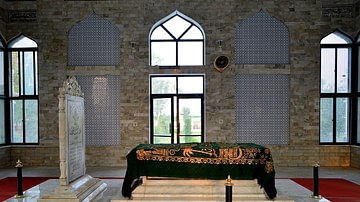
Shihab al-Din (also Muʿizz al-Din Muhammad ibn Sam), popularly known as Muhammad Ghori (r. 1173-1206 CE), was the Muslim ruler who laid the foundation for the subsequent Islamic ruling dynasties of India which saw its pinnacle...

Definition
Rashidun Caliphate
The first four caliphs of the Islamic empire – Abu Bakr, Umar, Uthman, and Ali are referred to as Rashidun (rightly guided) Caliphs (632-661 CE) by mainstream Sunni Muslims. Their tenure started with the death of Prophet Muhammad...
Image
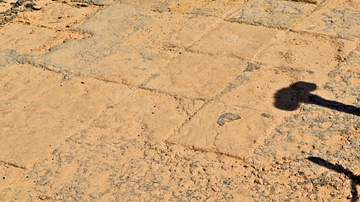
Babylonian Cobblestones
A close-up view of the original cobblestones of the Processional Street at Babylon. Note the black bitumen!
Image
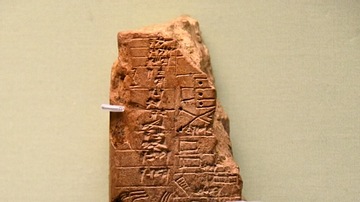
Secret Babylonian Numbers
A compendium of ancient signs united the knowledge of generations of scholars. It includes pictographic symbols from around 3000 BCE and a secret number for each sign, for encoding texts. Circa 450 BCE. Clay tablet. From...
Image
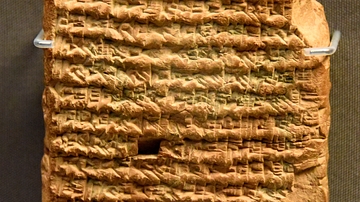
Babylonian Tablet Mentioning Coin Payments
This tablet records the exact coins required for transaction in Babylon. Because coins could circulate for many years, freshly minted coins were less worn and had a better silver weight. The tablet specifies...

Definition
Christianity
Christianity is the world's largest religion, with 2.8 billion adherents. It is categorized as one of the three Abrahamic or monotheistic religions of the Western tradition along with Judaism and Islam. 'Christian' is derived from...
