
Search
Remove Ads
Advertisement
Search Results

Definition
Squanto
Squanto (l. c. 1585-1622) was the Native American of the Patuxet tribe who helped the English settlers of Plymouth Colony (later known as pilgrims) survive in their new home by teaching them how to plant crops, fish, hunt, and generally...

Definition
Ancient Celtic Sculpture
The sculpture of the ancient Celts between 700 BCE and 400 CE is nothing if not varied as artists across Europe developed their own ideas and borrowed what interested them from neighbouring cultures. Early Celtic stone...
Definition
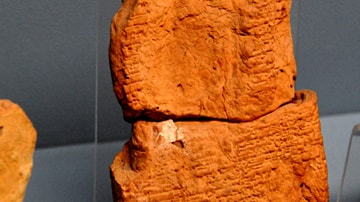
Code of Ur-Nammu - The Oldest Law Code in the World
The Code of Ur-Nammu (circa 2100-2050 BCE) is the oldest extant law code in the world. It was written by the Sumerian king Ur-Nammu (reign circa 2112-2094 BCE) or his son Shulgi of Ur (reign 2094 to...

Definition
Pharisees
The Pharisees were a Jewish sect that emerged c. 150 BCE and promoted the idea of priestly purity for all Jews, belief in providence or fate, and the concept of the resurrection of the dead, and taught that besides the commandments...

Definition
Tokugawa Tsunayoshi
Tokugawa Tsunayoshi (1646-1709) governed Japan as the fifth shogun of the Edo period (1603-1876). He has often been ridiculed as the 'dog shogun' because of the laws he enacted to protect the lives of animals. Economically...

Definition
Jallianwala Bagh Massacre - The British Atrocity at Amritsar
The 13 April 1919 Jallianwala Bagh Massacre (aka Amritsar Massacre) was an infamous episode of brutality which saw General Dyer order his troops to open fire on an unarmed crowd of men, women...

Definition
Ihara Saikaku
Ihara Saikaku (1642-1693) was a Japanese poet and novelist who played a leading role in creating the so-called ‘floating world’ (ukiyo-zoshi) genre of popular literature in the 17th century. His work was significant because, in...

Definition
Great Exhibition
The 1851 Great Exhibition was held in the purpose-built Crystal Palace in Hyde Park, London, to showcase the latest developments in engineering, science, and the arts, as well as objects of cultural significance from Britain and...

Definition
Ptolemy II Philadelphus
Ptolemy II Philadelphus ("The Sibling Loving", r. 282-246 BCE) was the second ruler of the Ptolemaic Dynasty. He consolidated the kingdom conquered by his father Ptolemy I and presided over its golden age. Ptolemy II invested...

Definition
Berenike IV
Berenike IV (r. 58-55 BCE) was queen of Ptolemaic Egypt and the older sister of Cleopatra VII (r. 51-30 BCE). She ruled briefly after her father Ptolemy XII was overthrown by a popular rebellion. Berenike IV's reign ended in 55 BCE...
