
Search
Remove Ads
Advertisement
Search Results

Article
History of Assyria
The foundation of the Assyrian dynasty can be traced to Zulilu, who is said to have lived after Bel-kap-kapu (c. 1900 BCE), the ancestor of Shalmaneser I. The city-state of Ashur rose to prominence in northern Mesopotamia, founding...

Image
Map of the Median Hegemony, c. 600 BCE - Power, Influence & Transition in Western Asia after Assyria
The Median hegemony (late 7th-early 6th century BCE) emerged in the aftermath of the Bronze Age Collapse (c. 1200-1150 BCE) and, more directly, the disintegration...
Image
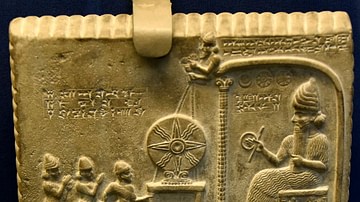
The Sun God Tablet or the Tablet of Shamash from Sippar
The Sun God tablet from the Temple of Shamash at Sippar, Southern Mesopotamia modern-day Iraq, Middle Babylonian Period, 860-850 BCE. The upper part of the tablet has a carved panel. Nabu-nadin-shum...
Image
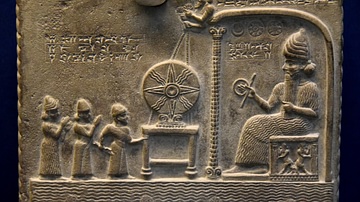
Detail of the Sun God Tablet from Sippar
This is the upper part of the obverse side of the tablet, which was excavated by Hormuzd Rassam in the late 19th century CE. Nabu-nadin-shum (a priest) and the goddess Aa lead Nabu-aplu-iddina (a king of Babylon...
Image
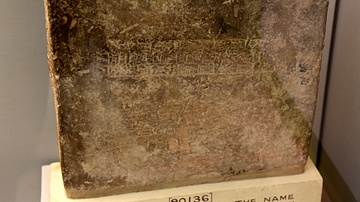
Brick Stamped with the Name of Nebuchadnezzar II
King Nebuchadnezzar II's building program at Babylon used around 15,000,000 baked bricks. Thousands bore his name and titles stamped into the clay: "Nebuchadnezzar...the eldest son of Nabopolassar, King...

Image
Clay Cover of the Tablet of Shamash
This is a fired clay cover of the sun god (Shamash) tablet. Its purpose was to protect the obverse side (face) of the tablet. It has retained the impression of the carved panel of the tablet. The Babylonian king...
