
Search
Remove Ads
Advertisement
Search Results

Image
Holi Celebration in the Mughal Period
Krishna and the gopis celebrate Holi, watercolour painting, c. 1765.
Holi is a festival of spring, of colours, and of happiness. This image depicts Holi being celebrated in the Mughal era.
Royal Collection Trust, Windsor.
Article
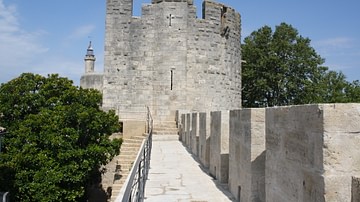
An Illustrated Glossary of Castle Architecture
Alure (Wall Walk) The walkway along the higher and interior part of a wall which often gives access to the higher floors of towers within the wall. Typically protected by battlements. Apse A semicircular projecting part of a building...
Image
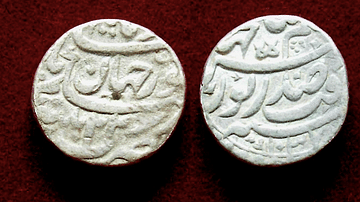
Mughal Coin of Nur Jahan
Silver Mughal coin bearing the name of Queen Nur Jahan (c. 1577-1645), wife of the Mughal Emperor Jahangir (r. 1605-1627).

Article
Diversity in Church Architecture in Medieval England
Medieval English churches differed in size and layout. Their original and evolving role(s), financial and material resources, and architectural fashions helped determine variability. However, their look ultimately grew from a constant symbiosis...
Image
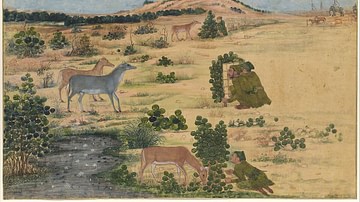
Preparations for a Mughal Hunt
A group of four blue bulls feed in scrubland near a pond, while four imperial huntsmen are hiding behind camouflage screens. In the distance there is a hunting party with elephants, horses, and flags. The other side of this page of the album...

Definition
Henry Every
Henry Every (b. 1653), also known as Henry Avery, Benjamin Bridgeman, ‘Long Ben’ and (incorrectly) John Avery, was one of the most savage and successful pirates in the Golden Age of Piracy. Capturing a treasure ship of the Mughal emperor...

Image Gallery
A Gallery of Chinese Art & Architecture
Chinese culture developed from small communities such as Banpo Village (c. 4500 BCE) through the early Xia Dynasty (c. 2070-1600 BCE) and the great dynastic periods that followed after, creating some of the most striking and memorable works...

Image
Portrait of a Mughal Woman
Portrait of a Mughal Woman, painting by Francesco Renaldi, Calcutta, 1787. British artist Francesco Renaldi travelled to India with the backing of the British East India Company in 1786. He produced various portraits from his time in Calcutta...
Image
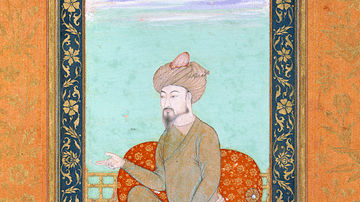
Babur, Mughal Emperor
A 17th-century painting of the emperor and founder of the Mughal Empire, Babur (l. 1483-1530), given name Zahīr ud-Dīn Muhammad. (Victoria and Albert Museum, London)
Image
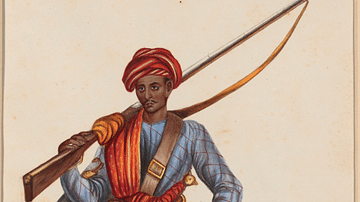
Mughal Empire Sepoy
A mid-19th century sepoy musketeer of the Mughal Empire (1526-1857).
