
Search
Remove Ads
Advertisement
Search Results

Video
Digging History 7: The Architecture and Engineering of Rome
The Romans began building with local materials, wood, clay, and tuff (see Episode 3 for local materials and geology of the city). There are many sources from antiquity, but a good place to start is with the writings of Vitruvius (on architecture...
Image
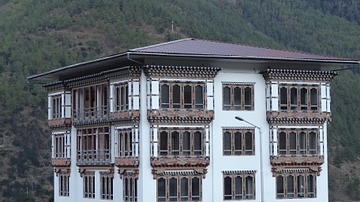
Distinctive Bhutanese Architecture
The distinctive architecture of Bhutan. A building in Thimphu.
Image
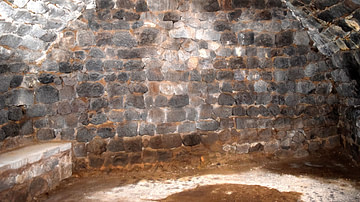
Unique Stone Architecture at Tatev Monastery
Tatev Monastery was one of medieval Armenia's most important religious and cultural centers during the Middle Ages. It's famous throughout the Caucasus for its stone architecture and location on a large basalt plateau near the Tatev village...

Image
Distinctive Bhutanese Architecture in Paro.
Contemporary Bhutanese buildings are often reconstructions of traditional and distinctive architecture. This photo shows modern offices and shops in the main street of Paro.
Image
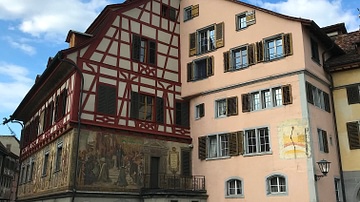
Medieval Architecture in Stein-am-Rhein, Switzerland
Stein-am-Rhein, Switzerland is famed for its medieval timber architecture. One can frequently observe medieval and early modern frescoes on the timber structures, and some even feature bay windows. Stein-am Rhein has a long history and was...

Image
Stone Architecture at Tatev Monastery
Tatev Monastery was one of medieval Armenia's most important religious and cultural centers during the Middle Ages. It's renown for its stone architecture and location on a large basalt plateau near the Tatev village in Syunik Province in...

Image
Korean Hanok Architecture
A modern building employing the classic features of the hanok architectural style of ancient Korea. (House of Kim Jeong-hui)

Image
Ajanta Architecture
The caves of Ajanta were built between 2nd century BCE and 6th century CE. Here beautifully decorated inner pillars and trifolium from Cave 26 can be seen.

Image
Typical Molding Details in Gandharan Architecture
Base molding typically seen on most stupa bases in the Taxila region

Definition
Koh-i-Noor
The Koh-i-Noor diamond (also Koh-i-Nur or Kūh-e Nūr) is one of the largest and most famous cut diamonds in the world. It was most likely found in southern India between 1100 and 1300. The name of the stone is Persian meaning ‘Mountain of...
