
Search
Remove Ads
Advertisement
Search Results

Definition
Electra by Sophocles
Electra is a play written by the 5th-century BCE Greek tragedian Sophocles. Similar to Aeschylus' Libation Bearers, Electra focuses on the return of Electra's brother Orestes from exile and the plot to murder their mother...

Definition
Amaterasu - Shinto's Greatest Goddess
Amaterasu Omikami ('the Great Divinity Illuminating Heaven') is the sun goddess and most important deity of the Shinto religion. Amaterasu is the ruler of Takama no Hara (the High Celestial Plain), the domain of...

Definition
The Eumenides
The Eumenides is a play written by Aeschylus (c 525 – 455 BCE), the “Father of Greek Tragedy,” the most popular and influential of all tragedians of his era. The Eumenides was the third play of a trilogy, The Oresteia, with the...

Definition
Astarte
Astarte is the Canaanite/Phoenician goddess of love, sex, war, and hunting who developed from the Mesopotamian deity Inanna/Ishtar. She is usually associated with the storm god Baal but seems to have been much more popular. She traveled...

Definition
Nanshe - The Selfless Sumerian Goddess of Social Justice
Nanshe (also known as Nanse, Nazi) is the Sumerian goddess of social justice and divination, whose popularity eventually transcended her original boundaries of southern Mesopotamia toward all points...

Video
Olympias: Mother to Alexander the Great and Second Wife of Phillip II of Macedon
Olympias, born with the name Myrtle, was the daughter of Neoptolemus, the king of Epirus, which was a Greek kingdom southwest of Macedonia and became the second wife of Philip...

Image
Minoan Snake Goddess, Knossos.
Faience figurine of the Minoan Snake Goddess - her dominion was over nature and fertility. New-Palace period (1600 BCE). Heraklion Archaeological Museum, Crete.
Image
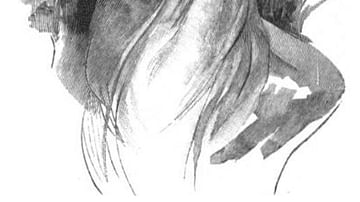
Sif- Norse Goddess with Golden Hair
An illustration portraying Sif, a golden-haired goddess in the Norse pantheon. She was associated with earth but was married to Thor, the god of the sky and thunder. Sif is a relatively little-known figure who...
Image
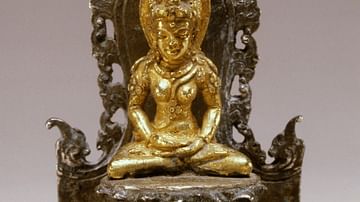
The Buddhist Goddess Tara
The Buddist goddess Tara, gold and silver figure from Java, 9th century.
The Walters Art Museum, Baltimore, Maryland.

Video
Did Roman Emperor Nero Murder His Mother?
Records of Nero's reign portray him as a monster who orchestrated his own mother's death. But was it even possible? Experts try to re-create the circumstances by which Nero was alleged to have sun his mother...
