
Search
Remove Ads
Advertisement
Search Results
Definition
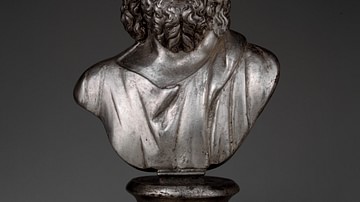
Serapis
Serapis is a Graeco-Egyptian god of the Ptolemaic Period (323-30 BCE) of Egypt developed by the monarch Ptolemy I Soter (r. 305-282 BCE) as part of his vision to unite his Egyptian and Greek subjects. Serapis’ cult later spread throughout...

Definition
Temple
A temple (from the Latin templum) is a structure usually built for the purpose of, and always dedicated to, religious or spiritual activities including prayer, meditation, sacrifice and worship. The templum was a sacred precinct defined...

Definition
Nabu - The Babylonian God of Wisdom and Writing
Nabu (sometimes known as Tutu) was the Babylonian god of wisdom, learning, prophecy, scribes, and writing, also responsible for the abundant harvest and all growing things. His name means "the Announcer,"...

Definition
Hinduism
Hinduism is the oldest religion in the world, originating in Central Asia and the Indus Valley, still practiced in the present day. The term Hinduism is what is known as an exonym (a name given by others to a people, place, or concept...

Definition
Phidias
Phidias (also Pheidias) was, according to his contemporaries, the most renowned of all Greek sculptors. His greatest masterpieces were completed between c. 465 and 425 BCE. Unfortunately, except through copies, no example of his work...

Definition
Selene
Selene (also known as Mene) is the personification and goddess of the moon in Greek mythology. Every night, she travels across the sky in her chariot, pulling the moon behind her. Selene is the daughter of the Titans Hyperion and Theia...

Definition
The Graces
The Graces (also Charites, sing. Charis) were goddesses from Greek mythology who personified charm, grace, and beauty. Hesiod describes three Graces, and this is their most common grouping in literature and art, but their number varies...

Definition
Urartu Civilization
Urartu, also known as the Kingdom of Urartu or the Kingdom of Van, was a civilization which developed in the Bronze and Iron Age of ancient Armenia, eastern Turkey, and northwestern Iran from the 9th century BCE. Controlling...

Article
Women's Work in Ancient Egypt
Women in ancient Egypt had greater rights than in any other civilization of the time. They could own land, initiate divorce, own and operate their own business, become scribes, priests, seers, dentists, and doctors...
Interview
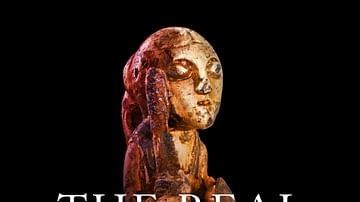
Interview: The Real Valkyrie: The Hidden History of Viking Warrior Women by Nancy Marie Brown
In this interview, World History Encyclopedia is joined by American author Nancy Marie Brown, who is talking to us about her new book The Real Valkyrie: The Hidden...
