
Search
Remove Ads
Advertisement
Search Results

Definition
Denisovan
The Denisovans are an extinct group of fossil humans who, along with their sister group the Neanderthals, also share an ancestor with Homo sapiens. Thus far, they are known only from Denisova Cave in the Altai Mountains in Siberia...

Definition
Chinese Literature
Chinese literature is among the most imaginative and interesting in the world. The precision of the language results in perfectly realized images whether in poetry or prose and, as with all great literature, the themes are timeless...

Definition
Ancient Afghanistan
The ancient history of Afghanistan, a landlocked country in Central Asia, is full of fascinating cultures, from early nomadic tribes to the realms of Achaemenid Persia, the Seleucids, the Mauryans, the Parthians, and Sasanians...

Definition
Potsdam Conference - When the WWII Allies Declared Japan Must Surrender
The Potsdam Conference, held from 17 July to 2 August 1945 in Potsdam in eastern Germany, decided how the Allies would deal with a defeated Germany and how they could best conduct the...

Definition
Khitan
The Khitan people formed the Liao dynasty and ruled parts of Mongolia, Manchuria, and northern China from 907 to 1125 CE. Adopting elements of Chinese government and culture, the Khitan were more than a match for their rivals the Song...

Definition
Scythian Art
Scythian art is best known for its 'animal art.' Flourishing between the 7th and 3rd centuries BCE on the steppe of Central Asia, with echoes of Celtic influence, the Scythians were known for their works in gold. Moreover, with the...

Definition
Gwanggaeto the Great
Gwanggaeto (Kwanggaeto), often referred to as Gwanggaeto the Great, was king of the Goguryeo (Koguryo) kingdom which ruled northern Korea during the Three Kingdoms period. Gwanggaeto reigned between 391 and 413 CE, and living...
Definition
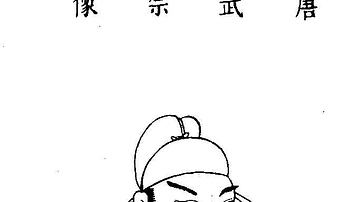
Emperor Wuzong of Tang
Wuzong of Tang (also Wu-Tsung, formerly Li Yan) reigned as emperor of China from 840 to 846 CE. He is best remembered today for his persecution of Buddhists, the worst such attack in all of China's history, and his early...

Article
Why Were Hiroshima & Nagasaki Bombed in WWII?
The decision to drop the atomic bomb in August 1945 was taken to avoid further Allied casualties in the Pacific War by forcing Japan into an immediate surrender. Another reason was, as the victors jostled...

Article
Women in the Mongol Empire
Women in the Mongol Empire (1206-1368 CE) shared the daily chores and hardships of steppe life with men and were largely responsible for tending animals, setting up camps, childrearing, producing food and cooking it. Having...
