
Search
Did you mean: Muse?
Remove Ads
Advertisement
Search Results

Article
The Foundation of the Royal Society
The Royal Society was founded in 1662 to promote scientific research and increase our knowledge of the natural world. With royal patronage and a stellar membership of great minds, the society quickly gained international...

Article
Inanna and Ebih - A Poetic Narrative on Feminine Power
Inanna and Ebih is a Sumerian/Akkadian poem attributed to Enheduanna (circa 2300 BCE), daughter of Sargon of Akkad. The work's original title is Inninmehusa ("Goddess of the Fearsome Powers") and...

Article
The Mummy's Curse: Tutankhamun's Tomb & the Modern-Day Media
Howard Carter's 1922 CE discovery of the tomb of Tutankhamun was world-wide news but, following fast upon it, the story of the mummy's curse (also known as The Curse of the Pharaoh) became even...

Article
Ghosts in the Middle Ages
The medieval Church informed the people's religious imagination during the Middle Ages (c. 476-1500) and the world was therefore interpreted - even by heterodox Christians - through the Church's lens. Ghosts – referred...

Article
Wreck of the Batavia
The Batavia was a Dutch East India Company ship that foundered on the coral reefs of the Houtman Albrolhos Islands, 60 kilometres (37 mi) off the coast of Western Australia, just before dawn on 4 June 1629. It was the flagship...
Article
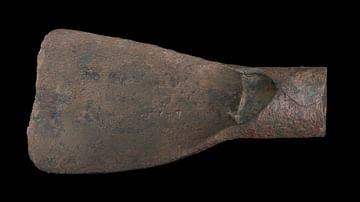
The Song of the Hoe - Praise for an Ancient Mesopotamian Farming Tool
The Song of the Hoe is a Sumerian praise poem celebrating the hoe for its many uses and linking it to the creation of the world by the great god Enlil. As the economy of Mesopotamia was...

Article
The Coronation Ceremony of the British Monarchy
The coronation ceremony of the British monarchy as we know it today involves many elements that have been a part of the pageantry ever since the 11th century. Such features of the ceremony carried out...

Article
Colonel Blood & the Theft of the Crown Jewels
Colonel Thomas Blood, a known conspirator, made an infamous but unsuccessful attempt to steal the British Crown Jewels from the Tower of London in 1671. Disguised as a clergyman, Blood and his gang swiped...

Image
Twelve Spices That Changed the World - Trade, Empire, and the Global Age of Spices, 1450–1650
Between c. 1450 and 1650, demand for spices and other high-value plant commodities became an important catalyst for European maritime expansion. Pepper, cinnamon, cloves...
Image
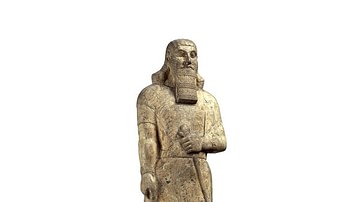
Statue of Ashurnasirpal II
Statue of Ashurnasirpal II from Nimrud (ancient Kalhu), modern-day northern Iraq, Neo-Assyrian Empire, 883-859 BCE. This statue of King Ashurnasirpal II (883-859 BCE) was placed in the Temple of Ishtar Sharrat-niphi...
