
Search
Remove Ads
Advertisement
Search Results
Image
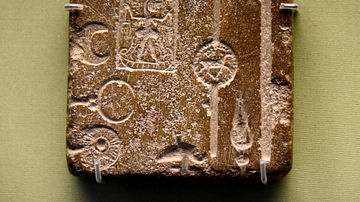
Stone Mould from Nineveh
This mould was used to make small and cheap metal amulets. One is an image of demonic Lamashtu, to keep her away from women and their new-borne infants. From Nineveh, Northern Mesopotamia, Iraq. Neo-Assyrian Period, 800-612...
Definition
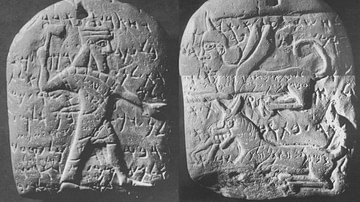
Arslan Tash Amulet
Dated to the 7th century BCE, the Arslan Tash amulet (AT1) was discovered in Arslan Tash, Syria and contains the writing of Phoenician, magic incantations. The limestone plaque includes a variety of features: incantations perceived...

Article
Ghosts in Ancient Mesopotamia - Just Another Aspect of Life
Ghosts in ancient Mesopotamia were understood as a reality of life, just as they were in other civilizations of antiquity. Although the cultures of the various Mesopotamian civilizations differed...

Image
Bronze Pazuzu Amulet
Pazuzu amulet has two rings for suspension. Pazuzu is a creature from Mesopotamian mythology with a human body, four wings, lion fore-paws, vulture's feet, and a rattlesnake tail. Pazuzu was the demon of the southwest wind...

Video
Ancient Medicine, Healing and Physicians in Antiquity
Medicine in the ancient world was often combined with what we would consider magic, especially in Ancient Mesopotamia and Egypt. In Mesopotamia, the goddess Gula who is also known as Ninkarrak and...
