
Search
Did you mean: Roman Mythology?
Remove Ads
Advertisement
Search Results

Definition
Ancient Persian Mythology
The mythology of ancient Persia originally developed in the region known as Greater Iran (the Caucasus, Central Asia, South Asia, and West Asia). The Persians were initially part of a migratory people who referred to themselves...

Definition
Ancient Egyptian Mythology
Egyptian mythology was the belief structure and underlying form of ancient Egyptian culture from at least c. 4000 BCE (as evidenced by burial practices and tomb paintings) to 30 BCE with the death of Cleopatra VII, the...

Definition
Ancient Pyongyang
Pyongyang (aka Pyeongyang) was the capital of several successive ancient Korean kingdoms. Located on the Daedong River in the north of the peninsula, the site was chosen by the legendary Dangun (Tangun), founder of the first...

Definition
Samguk Sagi
The Samguk sagi ('History of the Three Kingdoms' or 'Historical Records of the Three States') is a 12th-century CE text written by Gim Busik which is considered the first history of Korea. The text covers the history of Silla, Baekje...

Definition
Armenian Mythology
The mythology of ancient Armenia is a rich blend of indigenous traditions with imported ideas from neighbouring cultures and migrating peoples added over the centuries. The legends and stories helped to explain natural phenomena...

Article
Ten Norse Mythology Facts You Need to Know
The stories that make up what is known today as Norse mythology once informed the religious beliefs of the people of regions including Scandinavia and Iceland. To the Norse, the world was an enchanted place...
Definition
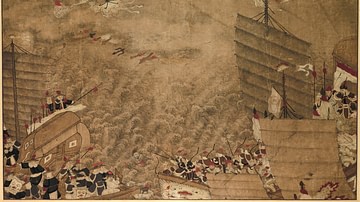
Wako - The Medieval Pirates of Southeast Asia
Wako (aka wokou and waegu) is a term used to refer to Japanese (but also including Chinese, Korean, and Portuguese) pirates who plagued the seas of East Asia from Korea to Indonesia, especially between the...
Definition
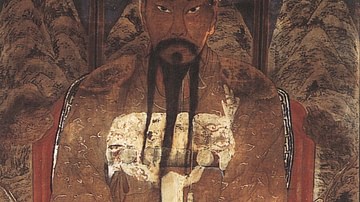
Dangun
Dangun Wanggeom (or Tangun) was the legendary founder of Gojoseon (Gochoson or Old Choson), the first Korean state which ruled northern Korea in the second half of the first millennium BCE. Gojoseon possessed the most advanced culture...

Article
The Japanese Invasion of Korea, 1592-8 CE
The two Japanese invasions of Korea between 1592 and 1598 CE, otherwise known as the 'Imjin Wars', saw Toyotomi Hideyoshi (1537-1598 CE), the Japanese military leader, put into reality his long-held plan to...

Definition
Silla
The Silla kingdom ruled south-eastern Korea during the Three Kingdoms period from the 1st century BCE to 7th century CE. The capital was Geumseong (Gyeongju) with a centralised government and hierarchical system of social ranks. The prosperity...
