
Search
Remove Ads
Advertisement
Search Results

Definition
Ming Dynasty
The imperial Ming dynasty ruled China from 1368 to 1644. It replaced the Mongol Yuan dynasty which had been in power since the 13th century. Despite challenges from abroad and within, the Ming dynasty oversaw an unprecedented growth...

Article
Ming Taxation & the Silver Economy
The rulers of China's Ming dynasty (1368-1644) acquired an insatiable desire for silver in the 16th century, largely to pay for huge prestige projects like building the Forbidden City in Beijing and repairing the...
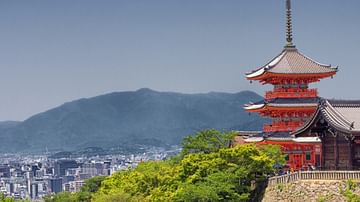
Image Gallery
A Gallery of Ancient Japanese Pagodas
In this gallery, we look at some of the most famous pagodas in Japan, many of which are classified as National Treasures. Pagodas are tall, multi-storied structures which traditionally featured as part of Buddhist...

Definition
Meiji Restoration
The Meiji Restoration was a political event that took place in Japan in 1868. In it, the Tokugawa family, a warrior clan that had ruled Japan for more than 260 years, was overthrown by a group of political activists who proclaimed...

Definition
Medieval Japan
The medieval period of Japan is considered by most historians to stretch from 1185 to 1603 CE. Stand out features of the period include the replacement of the aristocracy by the samurai class as the most powerful social group...

Definition
Caligula - The First Mad Emperor of Rome
Caligula (12-41 CE) was the third Roman emperor, who reigned from 37 to 41 CE. A member of the Julio-Claudian Dynasty, he came to power after the death of his great-uncle Tiberius. The ancient sources claim...

Definition
Queen Himiko
Queen Himiko, also known as Pimiko or Pimiku (183? - 248 CE), was a 3rd-century CE ruler of the territory in ancient Japan known as Hsieh-ma-t'ai or Yamatai, later to be known as Yamato. Considered by the Chinese as the ruler of...

Definition
Caracalla
Caracalla was Roman emperor from 211 to 217 CE. Born Lucius Septimius Bassianus, son of Septimius Severus and Julia Domna, he became co-ruler with his father in 198 CE and sole ruler after the death of his father in 211 CE and of his...
Definition
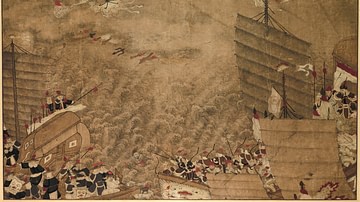
Wako - The Medieval Pirates of Southeast Asia
Wako (aka wokou and waegu) is a term used to refer to Japanese (but also including Chinese, Korean, and Portuguese) pirates who plagued the seas of East Asia from Korea to Indonesia, especially between the...

Definition
Ancient China
Ancient China produced what has become the oldest extant culture in the world. The name 'China' comes from the Sanskrit Cina (derived from the name of the Chinese Qin Dynasty, pronounced 'Chin') which was translated as 'Cin' by...
