
Search
Remove Ads
Advertisement
Search Results

Article
The Art of the Tang Dynasty
The art of the Tang Dynasty (618-907 CE) began to explore new possibilities in materials and styles with landscape painting and ceramics, in particular, coming to the fore. New techniques, a wider range of colours and an increase in connoisseurship...

Definition
Abbasid Dynasty
The Abbasids were an Arabic dynasty that initially ruled over most of the Islamic empire (save some western parts) after assuming the caliphate in 750 CE, later on, their empire fragmented, however, they retained spiritual supremacy as caliphs...

Image
Expansion of Early Islamic Caliphates
This map shows the expansion of the Islamic Caliphates in the 7th and 8th Centuries CE: 1. Dark Shade: Expansion under the Prophet Muhammad, 622-632 CE. 2. Medium Shade: Expansion under the Rashidun Caliphate, 632-661 CE. 3. Light Shade...

Definition
Parthian Art
Parthian art flourished within the Eurasian cultural corridor from the late hundreds BCE to the early 1st and 2nd centuries CE. With the Parthian Empire (247 BCE - 224 CE) stretching from India and China in the east to the Mediterranean shores...

Definition
The Art of War
The Art of War (Sunzi bingfa) is a 5th-century BCE military treatise written by the Chinese strategist Sun-Tzu (aka Sunzi or Sun Wu). Covering all aspects of warfare, it seeks to advise commanders on how to prepare, mobilise, attack, defend...

Image
Map of the Islamic Conquests in the 7th-9th Centuries
This map illustrates the rise and rapid expansion of Islam from the time of the Prophet Muhammad (622–632 CE) through the great caliphates of the 7th to 9th centuries. Beginning in Arabia, the new faith and its armies spread under the Rashidun...
Definition
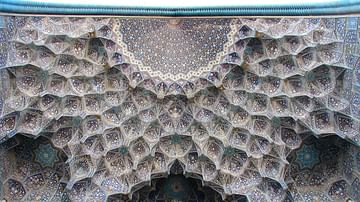
Muqarnas
Muqarnas is a three-dimensional architectural decorative element that flourished in its most complete form mainly during the Islamic period and is most pervasively used in domes and semi-domes. One of the key features of this mesmerizing...

Article
The Art of the Han Dynasty
The art of the Han dynasty (206 BCE - 220 CE) of ancient China is characterised by a new desire to represent everyday life and the stories from history and mythology familiar to all. The arts were fuelled both by a political stability with...

Definition
Islam
Islam is an Abrahamic-monotheistic religion based upon the teachings of Prophet Muhammad ibn Abdullah (l. 570-632 CE, after whose name Muslims traditionally add “peace be upon him” or, in writing, PBUH). Alongside Christianity and Judaism...

Definition
Thracian Art
The art produced by the people of Thrace, as indicated by the many precious objects found in Thracian tombs dating from the Bronze Age onwards, was, like the culture itself, a mix of indigenous ideas and foreign influences. Although it can...
