
Search
Remove Ads
Advertisement
Search Results

Video
The slaves who freed themselves - La Amistad Mutiny (DOCUMENTARY)
Historical documentary on the Amistad Rebellion On the night of 30 June to 1 July 1839, 53 recently captured Africans revolted against their jailers on the Spanish schooner La Amistad...
Definition
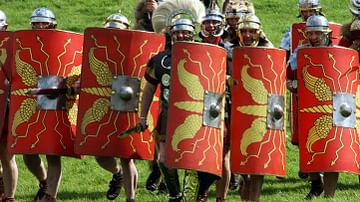
Legio I Germanica
Legio I Germanica was a Roman legion that won acclaim early under Augustus (27 BCE - 14 CE) but was stripped of its title for cowardice. Stationed on the Lower Rhine, the legion mutinied in 14 CE and then faced disgrace when...

Image
Ancient Indian Ship
This relief depicts an ancient Indian ship likely to have been used by Indian adventurers sailing to Java, Indonesia.
Location: Borobudur temple, Magelang, Central Java, Indonesia

Image
Map of the Trade in the Indian Ocean 15th-16th century - From Afro-Asian Exchange to European Intervention
The Indian Ocean trade network of the 15th and 16th centuries formed one of the most extensive and dynamic systems of exchange in the premodern world, linking...
Image
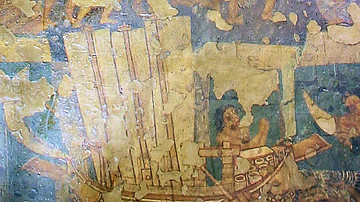
Ancient Indian Ship
This Ajanta mural depicts an ancient Indian ship with high stem and stern and three oblong sails attached to three masts. Steering-oars can also be seen. Location: Cave No. 2, Ajanta Caves, Aurangabad District, Maharashtra...

Definition
Henry Every
Henry Every (b. 1653), also known as Henry Avery, Benjamin Bridgeman, ‘Long Ben’ and (incorrectly) John Avery, was one of the most savage and successful pirates in the Golden Age of Piracy. Capturing a treasure ship of the Mughal...

Article
Fall of the East India Company
The British East India Company (1600-1874) was the largest and most successful private enterprise ever created. All-powerful wherever it colonised, the EIC's use of its own private army and increasing territorial control...

Article
Trail of Tears: Memorial and Protest of the Cherokee Nation by John Ross
The Trail of Tears was the forced relocation of the "Five Civilized Tribes" – Cherokee, Chickasaw, Choctaw, Muscogee Creek, and Seminole – from their ancestral lands in the Southeastern...

Interview
Interview: Bejeweled Sri Lanka
The first comprehensive survey of Sri Lankan art organized by an American museum, The Jeweled Isle: Art from Sri Lanka, on show now at the LACMA in Los Angeles, California, presents some 250 works addressing nearly...

Image
North America in the French and Indian War 1754–1763 - A Colonial War and the Roots of American Revolution
This map illustrates the course and key developments of the French and Indian War (1754–1763), the North American theater of the global Seven Years' War between...
