
Search
Remove Ads
Advertisement
Search Results

Definition
God's Wife of Amun
The position of God's Wife of Amun was one of the most politically powerful and spiritually significant in later Egyptian history. Elevated from a figurehead in the New Kingdom (c.1570-1069 BCE), the God's Wife of Amun would...

Definition
Zorvanism
Zorvanism (also given as Zuvanism, Zurvanism) was a sect of the Persian religion Zoroastrianism which emerged in the late Achaemenid Empire (c. 550-330 BCE) and flourished during the Sassanian Empire (224-651 CE). It is often referenced...

Definition
Djed
The djed is an ancient Egyptian symbol for stability which features prominently in Egyptian art and architecture throughout the country's history. `Stability' should be understood to mean not only a firm footing but immutability and permanance...

Definition
Thebes (Egypt)
Thebes was the capital of Egypt during the period of the New Kingdom (c.1570-c.1069 BCE) and became an important center of worship of the god Amun (also known as Amon or Amen, a combination of the earlier gods Atum and Ra). Its...

Definition
Etruscan Religion
The religion of the Etruscans, the civilization which flourished from the 8th to 3rd century BCE in central Italy, has, like many other features of the culture, long been overshadowed by that of its Greek contemporaries and Roman...

Article
Interrelations of Kerma and Pharaonic Egypt
The vacillating nature of Ancient Egypt's associations with the Kingdom of Kerma may be described as one of expansion and contraction; a virtual tug-of-war between rival cultures. Structural changes in Egypt's...

Article
Ten Great Native American Mound Sites
The Native Americans of Pre-Colonial North America built thousands of mounds across the continent which served various purposes and sometimes reached heights over 100 feet. Many of the mound sites were thriving...

Interview
Interview: The Ancient Southwest
Pre-Columbian civilizations of the Southwestern United States and Northern Mexico include the Hohokam who occupied the US state of Arizona, the Anasazi or Ancestral Pueblo Peoples who resided in the Four Corners Region...
Article
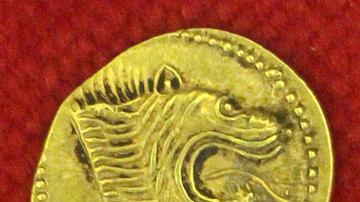
Etruscan Trade
The Etruscan civilization flourished in central Italy between the 8th and 3rd century BCE, and their prosperity was largely based on their exploitation of local mineral resources, both through manufactured goods and trade. The...

Article
Death, Burial & the Afterlife in the Ancient Celtic Religion
The ancient Celts who occupied large parts of Europe from 700 BCE to 400 CE displayed a clear belief in an afterlife as evidenced in their treatment of the dead. In the absence of extensive...
