
Search
Remove Ads
Advertisement
Search Results
Image
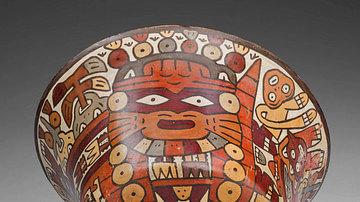
Nazca Culture Bowl
Bowl, 180 BCE / 500 CE. Nazca; south coast, Peru. The Art Institute of Chicago, Kate S. Buckingham Endowment.

Definition
Ghosts in the Ancient World - The Return of the So-Called Dead
A belief in an afterlife was central to every major civilization of the ancient world and this encouraged the recognition of the reality of ghosts as the spirits of the departed who, for one...

Definition
Homolovi
Homolovi or Homolovi State Park (formerly: Homolovi Ruins State Park) is a cluster of archaeological sites that contains the ruins of eight pre-Columbian Ancestral Puebloan (Anasazi) and Hopi pueblos in addition to some 300 other remains...

Definition
Parthia (Empire)
The Parthians ruled from 247 BCE to 224 CE creating a vast empire that stretched from the Mediterranean in the west to India and China in the east. East of the Caspian Sea there emerged from the steppe of Central Asia a nomadic...

Definition
Knossos
Knossos (pronounced Kuh-nuh-SOS) is the ancient Minoan palace and surrounding city on the island of Crete, sung of by Homer in his Odyssey: “Among their cities is the great city of Cnosus, where Minos reigned when nine years old, he...

Definition
Ancient Persian Art and Architecture
Persian art and architecture in the present day is associated with the nation of Iran and usually designated as beginning with the Achaemenid Empire (c. 550-330 BCE) but has an even longer history with its origins...
Definition
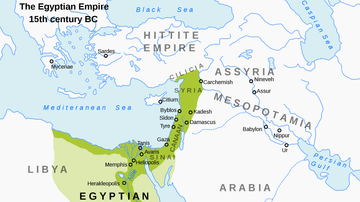
Egyptian Empire
The Egyptian Empire rose during the period of the New Kingdom (c. 1570- c. 1069 BCE), when the country reached its height of wealth, international prestige, and military might. The empire stretched from modern-day Syria in the...

Article
Cultural Links between India & the Greco-Roman World
Cyrus the Great (558-530 BCE) built the first universal empire, stretching from Greece to the Indus River. This was the famous Achaemenid Empire of Persia. An inscription at Naqsh-i-Rustam, the tomb...
Article
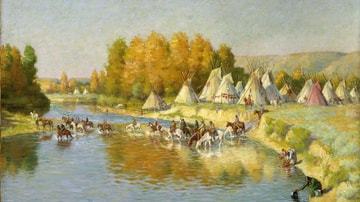
Ten North American Native Facts You Need To Know
The history and culture of the Native Peoples of North America are often overlooked as they have been largely eclipsed by the history of the European settlers who colonized the region beginning in the...

Article
The Horse-rider Theory in Ancient Japan
The 'horse-rider theory' is a controversial proposal that Japan was conquered around the 4th or 5th century CE by a culture from northern Asia to whom the horse was especially important. Although archaeological...
