
Search
Remove Ads
Advertisement
Search Results

Article
Norse-Viking Symbols & Meanings
A symbol is an image or object which represents an abstract concept, often having to do with one's religious beliefs. Every civilization, from the most ancient to the present, has made use of symbols to make the abstract...

Article
Hygieia, the Goddess of Health
Modern medicine has its origin in the ancient world. The oldest civilizations used magic and herbs to cure their sick people, but they also used religion to free them from harm and to protect their health. The medical...

Image
Ancient Near East c.1500-1300 BCE - The Old Hittite Collapse and the Rise of Kassites, Mitanni, and the New Kingdom of Egypt
This map illustrates the geopolitical landscape of the ancient Near East following the destructive campaigns of the Old Hittite Empire (circa...

Image
The Ancient Near East, c. 1300 BCE - On the Eve of Collapse: Power and Politics in the Late Bronze Age
This map illustrates the shifting political landscape of the Ancient Near East in the 13th century BCE, a period marked by the rise of imperial powers and the...

Image
Treaty of Kadesh
The Hittite version of the Egyptian–Hittite peace treaty (Treaty of Kadesh), discovered at Boğazköy (Turkey), 1258 BCE. The Treaty of Kadesh holds the distinction as the world's first peace treaty. Istanbul Archeology Museum.

Image
City Wall of Hattusa, Reconstruction
Modern reconstruction of a 65m long section of the city wall of Hattusa made of mud brick with defence towers built at intervals of 20-25 metres. The reconstructed part rests on top of the original Hittite foundations...
Image
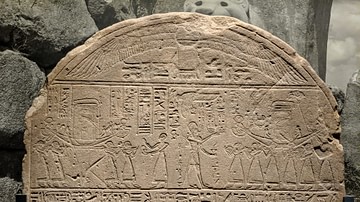
Bakhtan Stela (Upper Part)
This stela shows two symmetrical scenes. On the left, we see a priest offers incense to a barque carrying a statue of "Khonsou-Spellcaster-of-Thebes-and-Chaser-of-Demons". On the right, Ramesses II presents incense to...

Image
Map of the The Mitanni (Hanigalbat) empire, c. 1600-1300 BCE - Between Egypt and the Hittites, A Kingdom of Diplomacy and War
The Mitanni Empire was a major Late Bronze Age power that rose in northern Mesopotamia and Upper Syria between c. 1600 and 1300 BCE, shaping...
Image
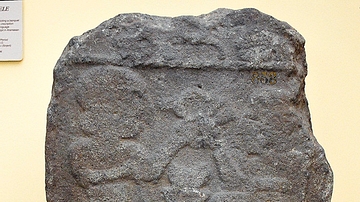
Stela from Ördek-Burnu
The inscriptions on this basalt stela, which depicts a banquet scene, were Hittite hieroglyphic but the script itself was Aramaean. From Ördek-Burnu (modern-day Sinjerli, Gaziantep, Turkey). Late Hittite period, 9th century...

Image
The Deeds of Anitta Tablet from Hattusa
The text inscribed on this clay tablet was the first document written in Hittite language. It is a copy of the original, written during the Hittite Imperial Period. Anitta was the son of Pithana and was a king...
