
Search
Remove Ads
Advertisement
Search Results

Definition
Ptolemy II Philadelphus
Ptolemy II Philadelphus ("The Sibling Loving", r. 282-246 BCE) was the second ruler of the Ptolemaic Dynasty. He consolidated the kingdom conquered by his father Ptolemy I and presided over its golden age. Ptolemy II invested...

Definition
Segesta
Segesta (or Egesta), located in the north-west corner of Sicily, was an important trading town from the 7th century BCE onwards. Situated on the strategically advantageous slopes of Mt. Barbaro, yet still close enough to the coast to...
Definition
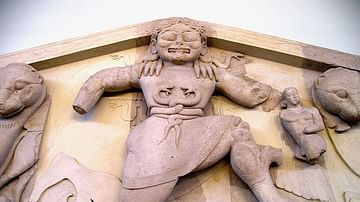
Corcyra - The Ancient City-State of Corfu
Corcyra (modern Corfu and also known as Kerkyra) located in the Ionian sea is one of the northern most Greek islands and was an important polis or city-state in the Archaic and Classical periods. Possessing...

Definition
Artemisia I of Caria
Artemisia I of Caria (l. 480 BCE) was the queen of the Anatolian region of Caria (south of ancient Lydia, in modern-day Turkey). She is most famous for her role in the naval Battle of Salamis in 480 BCE in which she fought...

Definition
First Triumvirate
The First Triumvirate of ancient Rome was an uneasy alliance between the three titans Julius Caesar, Pompey, and Crassus which, from 60 BCE until 53 BCE, dominated the politics of the Roman Republic. Alliances have always been...

Definition
Ostracism - Political Exclusion in Ancient Athens
Ostracism was a political process used in 5th-century BCE Athens whereby those individuals considered too powerful or dangerous to the city were exiled for 10 years by popular vote. Some of the greatest...

Definition
Cassander
Cassander (c. 355-297 BCE, r. 305-297 BCE) was self-proclaimed king of Macedon during the political turmoil following Alexander's death. Born in Greece as the son of Antipater, the regent of Macedon and Greece in the absence of Alexander...

Definition
Xenophon
Xenophon of Athens (l. 430 to c. 354 BCE) was a contemporary of Plato and a fellow student of Socrates. He is best known for his Anabasis (The March Up Country) detailing the retreat of the Ten Thousand Greek mercenaries after the defeat...

Definition
Late Period of Ancient Egypt - The End of Egyptian Rule of Egypt
The Late Period of Egypt (525-332 BCE) is the era following the Third Intermediate Period (1069-525) and preceding the brief Hellenistic period (332-323 BCE) when Egypt was ruled by the Argead...

Definition
Wall
The English word 'wall' is derived from the Latin, vallus meaning 'a stake' or 'post' and designated the wood-stake and earth palisade which formed the outer edge of a fortification. The palisades were in use early on and are mentioned...
