
Search
Remove Ads
Advertisement
Search Results

Article
Louis XIV and the Revocation of the Edict of Nantes
Beginning in the 16th century, Protestants in France struggled in their rapport with royal power. Protestants owed the recognition of their rights more to sovereign decrees than to genuine tolerance...

Article
France’s 1905 Law of Separation of Church and State
The 1905 Law of Separation of Church and State was enacted as the climax of decades of conflict between monarchists and anticlerical Republicans who viewed Christianity as a permanent obstacle to the...

Article
Stalin's Great Purge - State Oppression in the USSR
Joseph Stalin's Great Purge, also known as the Great Terror of 1936-8, was the most manic part of a decade of state oppression in the USSR. The purges saw the arrest of around 8 million Soviet citizens...

Article
The Great Jewish Revolt of 66 CE
The Roman Empire in the early 1st century CE was often regarded as the perfect empire. The outstanding military prowess of the Romans was used to expand the empire, and once the territories were acceptably pacified...
Article
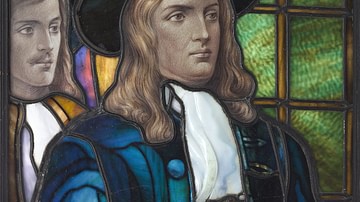
William Penn's Holy Experiment
In the 17th century, many groups of British Christians rose and fought against religious intolerance and corruption. The Puritans sought a return to biblical religion and a purified form of Christianity in England...

Article
Fall of the Western Roman Empire
To many historians, the fall of the Western Roman Empire in the 5th century CE has always been viewed as the end of the ancient world and the onset of the Middle Ages, often improperly called the Dark Ages, despite...

Article
How Did Hitler Rise to Power?
The rise of Adolf Hitler (1889-1945), the Nazi dictator of Germany from 1933, was enabled by those already in power eager to take advantage of his popularity. Hitler promised to make Germany great again after the humiliation...

Article
South Carolina Declaration of Secession - Why South Carolina Left the Union
On 20 December 1860, 169 delegates met in Institute Hall in Charleston, South Carolina, to consider the motion of secession from the United States of America. They voted unanimously...

Article
Harrison's Marine Chronometer - Measuring Longitude at Sea
John Harrison (1693-1776) invented an accurate marine chronometer after several decades of research and development. While the pendulum clock had already been invented in the 17th century, a clock...

Article
US Involvement in WWI - From Isolationism to Military Intervention
The United States remained neutral in the first three years of the First World War (1914-18) but did finally join the conflict at the end of 1917 following the threat of unrestricted submarine...
