
Search
Remove Ads
Advertisement
Search Results

Definition
Roman Sculpture
Roman sculpture blended the idealised perfection of Classical Greek sculpture with a greater aspiration for realism. It also absorbed artistic preferences and styles from the East to create images in stone and bronze which rank...

Definition
Etruscan Art
The art of the Etruscans, who flourished in central Italy between the 8th and 3rd century BCE, is renowned for its vitality and often vivid colouring. Wall paintings were especially vibrant and frequently capture scenes of Etruscans...

Interview
Interview with Michael Levy
Join World History Encyclopedia as they talk to Michael Levy, a prolific composer of the ancient lyre all about his inspiration and knowledge of the instrument. If you want to hear Michael perform, be sure to check out...

Article
Dogs & Their Collars in Ancient Greece
Dogs in ancient Greece are regularly depicted in art, on ceramics, in literature, and other written works as loyal companions, guardians, hunters, and even as great intuitive thinkers; all of these expressing...
Article
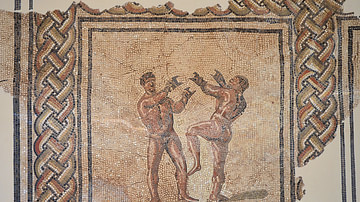
Boxing in the Roman Empire
Boxing is one of the oldest sports in the world that is still practiced today. Included in the original athletic contests of the Olympic Games, pugilism or boxing was well known and loved by the ancient Greeks and Romans...

Definition
Parthia (Empire)
The Parthians ruled from 247 BCE to 224 CE creating a vast empire that stretched from the Mediterranean in the west to India and China in the east. East of the Caspian Sea there emerged from the steppe of Central Asia a nomadic...

Definition
Hippolytus
Hippolytus is a tragedy written by Euripides (c. 484-407 BCE), one of the great Greek playwrights of the early 5th century BCE. As with many tragedies of the era, the central focus of Hippolytus is humanity's relationship with the...

Definition
Aristophanes
Aristophanes (c. 460 - c. 380 BCE) was the most famous writer of Old Comedy plays in ancient Greece and his surviving works are the only examples of that style. His innovative and sometimes rough comedy could also hide more sophisticated...

Definition
Zeus
Zeus was the king of the 12 Olympian gods and the supreme god in Greek religion. Zeus is often referred to as the Father, as the god of thunder, and the 'cloud-gatherer'. Zeus controlled the weather and offered signs and omens. Zeus generally...
Definition
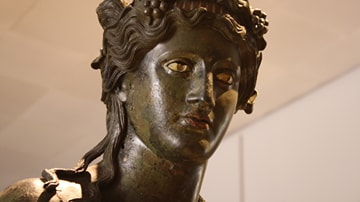
Dionysos
Dionysos (Roman name: Bacchus, also known as Dionysus) was the ancient Greek god of wine, merriment, and theatre. Being the bad boy of Mt. Olympus, Dionysus was perhaps the most colourful of the Olympian Gods. Son of Zeus In Greek...
