
Search
Remove Ads
Advertisement
Search Results
Image
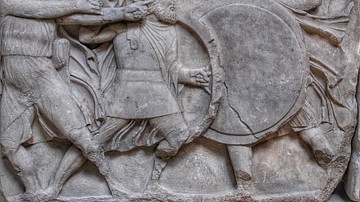
Greek Hoplites Fighting
Frieze of Greek hoplites fighting, from Nereid Monument at Xanthos in Lycia, ca. 390–380 BCE. On display at the British Museum, London.
Image
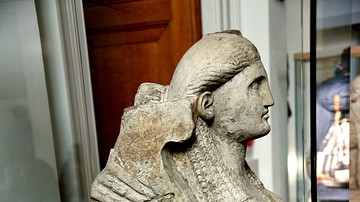
Greek Sphinx, British Museum
Greek sphinx that may once have guarded the tomb of a Greek inhabitant in Egypt. Roman Egypt, 2nd century CE. In Greek mythology, the sphinx was a monster with the head of a woman, a bird's wings, the body of a lion...

Video
The Greek Hero Bellerophon and his Flying Horse Pegasus
Bellerophon or Bellerophontes is a hero in Greek mythology who is best known as the man who tamed the winged horse Pegasus. Bellerophon was the son of Poseidon the god of the sea and horses and...

Image Gallery
21 Images of Greek and Roman Charioteers
This gallery features images of Greek and Roman chariot racers. Chariot racing was the most popular spectator sport in ancient times. In Greece, chariot racing was important in aristocratic funeral games from...
Image
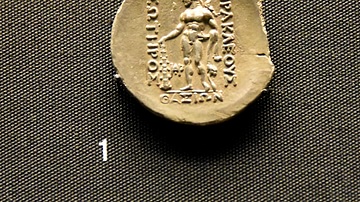
Celtic Coin Copying Greek Inscription
Early Iron Age Celtic people copied Greek coins, often faithfully reproducing their designs and inscriptions. This suggests that Thracian die-engravers were illiterate, as legible Greek letters were gradually...

Image
The Twelve Elder Titans in Greek Mythology - according to Theogony (Generations of the Gods) by Hesiod
In early Greek cosmology, the Twelve Elder Titans were the children of the primordial deities Gaia (Earth) and Ouranos (Sky), representing an older divine order...

Definition
Medusa
Medusa is a figure from Greek mythology, the only mortal of the three Gorgons, along with her immortal sisters, Stheno and Euryale. The three Gorgons were born to the sea god of the dangers of the hidden deep, Phorcys, and the goddess...

Definition
Iphigenia in Aulis
Iphigenia in Aulis (or at Aulis) was written by Euripides, the youngest and most popular of the trilogy of great Greek tragedians. The play was based on the well-known myth surrounding the sacrifice of Agamemnon and Clytemnestra's...

Definition
Antikythera Mechanism
The Antikythera mechanism (also known as the Antikythera Device), dated to the late 2nd century/early 1st century BCE (roughly 205-60 BCE) is understood as the world's first analog computer, created to accurately calculate...

Definition
Apollo
Apollo was a Greek god associated with the bow, music, and divination. The epitome of youth and beauty, source of life and healing, patron of the arts, and as bright and powerful as the sun itself, Apollo was perhaps the most loved of...
