
Search
Remove Ads
Advertisement
Search Results

Definition
Itsukushima Shrine
Itsukushima Shrine is a Shinto shrine on the island of the same name, also known as Miyajima, located in Hatsukaichi, Hiroshima Prefecture, Japan. Traditionally founded in the 6th century CE, the present layout of buildings...

Definition
Roman Baths
Roman baths were designed for bathing and relaxing and were a common feature of cities throughout the Roman empire. Baths included a wide diversity of rooms with different temperatures, as well as swimming pools and places to read...

Definition
Chidambaram
Chidambaram (Cidambaram) is an important Chola temple site in Tamil Nadu, southern India. Most of the temples at Chidambaram were built in the 12th and 13th centuries CE. The site is dominated by the huge gateway tower of the Nataraja...

Definition
Ajanta
Approximately 67 miles (107 km) to the north of Aurangabad in the Indhyadri range of Western Ghats lie the caves of Ajanta. The 30 caves, famous for their early Buddhist temple architecture and many delicately drawn murals, are located...

Definition
Kilwa
Kilwa, an island located off the coast of East Africa in modern-day southern Tanzania, was the most southern of the major Swahili Coast trading cities that dominated goods coming into and out of Africa from and to Arabia, Persia, and...
Definition
Acquarossa
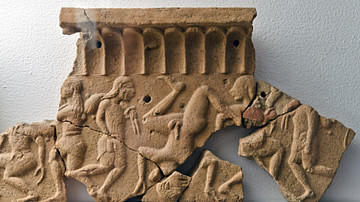
Acquarossa, located in the north of Italy's Lazio region, is the site of an Etruscan settlement of unknown name. Although much smaller than other, more famous Etruscan towns, Acquarossa has proved invaluable for archaeologists as...

Definition
Indo-European Languages
The Indo-European languages are a family of related languages that today are widely spoken in the Americas, Europe, and also Western and Southern Asia. Just as languages such as Spanish, French, Portuguese and Italian are...

Definition
Ull
Ull (also known as Ullr), with his bow and skis, is such an elusive presence in Norse mythology that no conclusive remarks can be made about him. The 13th-century Icelandic author Snorri describes him only briefly in his Prose Edda, and...

Definition
Attila the Hun
Attila the Hun (r. 434-453 CE) was the leader of the ancient nomadic people known as the Huns and ruler of the Hunnic Empire, which he established. His name means "Little Father" and, according to some historians, may not have...

Definition
Valerian
Valerian ruled as emperor of the Roman Empire from 253 CE until his capture in 260 CE. In 253 CE an elderly Roman military commander and experienced former senator was proclaimed emperor by his troops - a very common occurrence at the...
